Yeti
YETI’S SUPER SMART PRICE SENSITIVITY HANDLING
What's good about it
How to use this for your brand
That reframing does something really clever. Research by Gourville (1998) at Harvard identified what he called the "pennies-a-day" effect AKA breaking a large price down into smaller units of time dramatically changes how expensive it feels.
Another study found that when a $300 annual donation was framed as 85 cents a day, 52% of people agreed to it. Framed as $300 a year, only 30% did. It was the same amount of money, but one felt much more expensive.
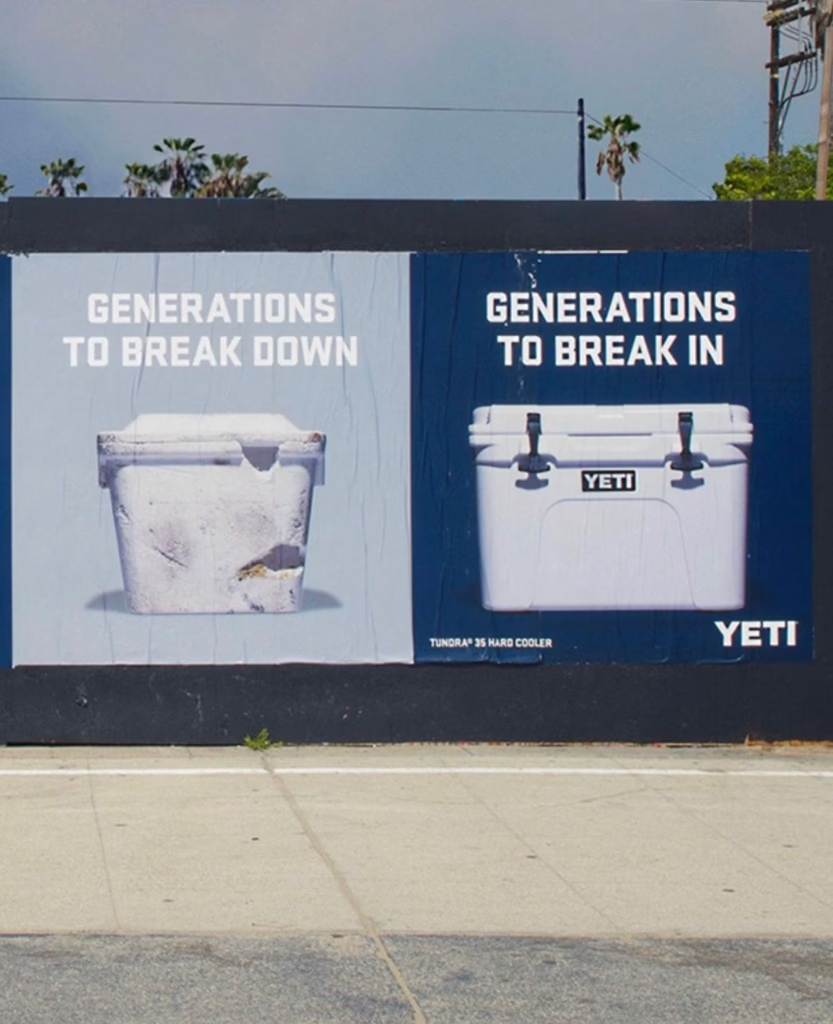
Yeti is riffing on that behavioural science, but in reverse. They're not making the price feel smaller by breaking it down. They're making it feel less expensive by extending how long you'll use it for. A $400 coolbox sounds expensive. A coolbox your grandchildren will still be using sounds like a bargain. It's still the same cost-per-use calculation in our brain, but there's an element of emotion and legacy layered in too. Really smart.And, double smart, the reframing happens entirely through story and identity. There's no numbers or dollar signs.
And that shift — from a one-time purchase to acquiring something, from a commodity to heirloom — is making the product seem more than worth the money.
It's really, really smart. (And has made Jack want to buy even more Yeti stuff.) So if you've got a premium product or a subscription product with a price point that makes people hesitate, don't defend it. Reframe it. What does your product look like as a cost-per-use rather than a one-off purchase? What does it look like over five years? Ten? Is there a version of your copy that makes the cheaper alternative feel like the more expensive choice in the long run? Can you lean into that with your copy? 👆 That's where the nuggets of gold are.