Do Words Good — Swipe File
dowordsgood.com/copywriting-swipe-file
Wype
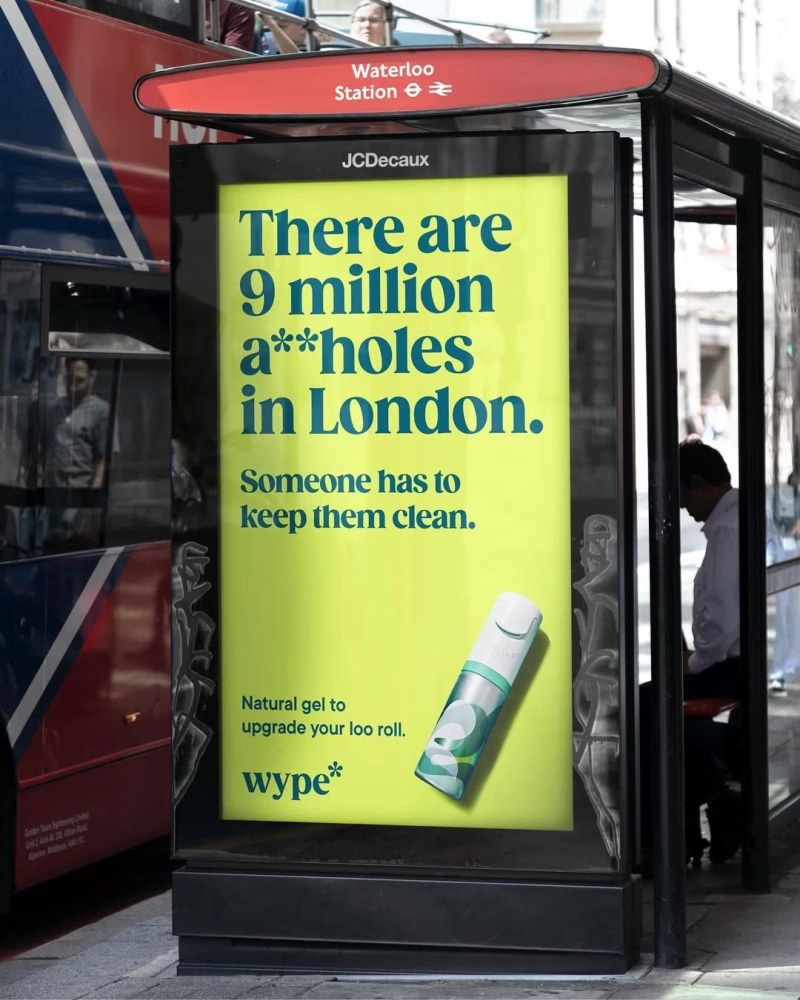
WYPE’S ATTENTION-GRABBING CAMPAIGN
What's good about it
The line between ads like this and Bart Simpson's "SEX! Now I have your attention..." poster is absolutely paper thin, which is why we love it when brands nail it.
To do something that grabs attention, gets across your USP and creates enough curiosity (not to mention free PR) that people discover your brand? That's wicked smart.
(Plus, it's rare you get an ad that's really clever and fun to sing to the tune of Katie Melua.)
How to use this for your brand
Now, using shock to grab people's attention is nothing new at all. (In fact, the earliest example we found dated back to 1919 with an ad of a pig butchering itself.)
And most of the time, it's not all that clever either. Lots of mid-2010s challenger brands *cough Brewdog cough* used to love doing controversial stuff just for the sake of attention.
But Wype don't fall into that category.
This ad works where other designed-to-shock ads fail because it's congruent.
Those shock-vertising ads fall flat because they’re designed to make noise, not build anything long-term. They’re basically a firework: a big bang, a quick “ooh”, then nada.
In other words, people remember the stunt and forget what you were actually trying to say.
(This is sometimes called the vampire effect, where the way the message is delivered overshadows the message completely, leading to lower recall.)
This ad, on the other hand, work because the provocation is congruent. AKA, the offence is the message, so it gets remembered and absorbed and understood on a gut-level.
And that's the big thing to remember if you're going to try shock-first advertising: research shows that these ads only really work when the shock is related to the payoff.
So make sure your shock tactics work on a meta level too.
Going for offensive, bold copy? Tie it back to the idea of offence somehow.
Going for a big, bold joke? Make it related to being funny somehow.
Think things like "we find it offensive that big brands are packing your kids' drinks with sugar" or "we're sorry to swear, but we find it more offensive that billions of tonnes of food are going to waste every year".
(Check out the Thinx entry in the swipe file for another brand nailing this from another angle.)
In other words, weaponise that initial shock and offence to drive home your point and bring customers into your worldview and you're cooking with gas.