Do Words Good — Swipe File
dowordsgood.com/copywriting-swipe-file
Skin + Me
SKIN + ME’S BANGING FAQ COPY
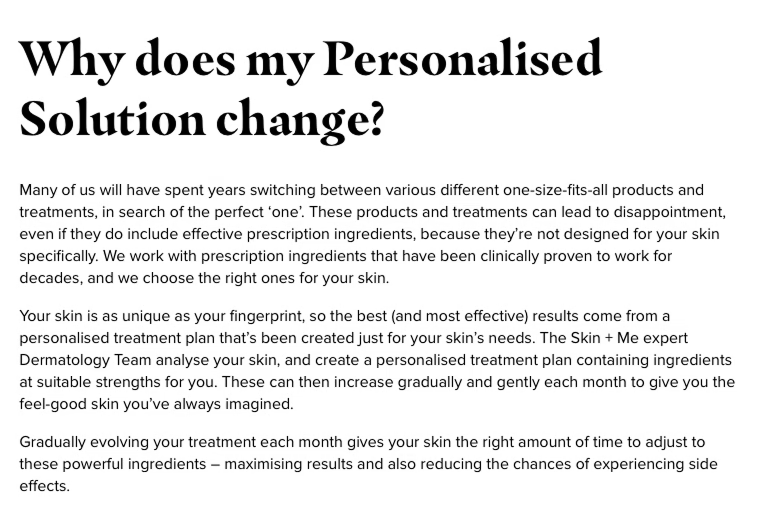
What's good about it
We absolutely 💛 a well-written FAQ.
And while we’d be lying if we said that we don’t sometimes use FAQs to sneak some clunky keywords in or try and getting cited by AI, they're more than just a traffic tool.
When we’re working on copy, especially on a PDP, we like to think of FAQs as our last opportunity to nudge somebody from being on the fence and into that “buy now” state of mind.
And this Skin + Me answer does exactly that.
How to use this for your brand
We're big believers in the idea that every FAQ question is actually a worry or hesitation in disguise.
"What's your returns policy?" = are you going to make this difficult if it doesn't work out?
"How long does delivery take?" = can I actually trust you to get this to me on time?
"What are the ingredients?" = is there anything in here I should be worried about?
"What's the science behind this?" = is this actually going to work for me?
And if your FAQs answer the functional part but ignore the emotional part, then they can feel a bit terse. A bit incomplete. And they'll miss getting that satisfying brain click of "ahhh, that's the answer I needed" from your customers.
The data on FAQs backs this up too.
👉 53% of shoppers say they’ll abandon a purchase if they can’t find a quick answer. (It’s an older study, but it’s the latest data we could find. And it’s still the gold standard research for this topic.)
👉 One study found that browsers who interact with FAQs and Q&As are over twice as likely to convert into customers.
👉 According to the Harvard Business Review, 81% of customers prefer to try and self-serve (AKA, look for the answers themselves)
👉 Convertcart even cite comprehensive FAQs as a way to lower returns and refunds.
And, as a Baymard Institute study from a few years ago points out:
“One of the major issues on product pages were unaddressed user questions and concerns. When the subjects felt unsure about a product, they either went off-site to research it further (at which point competitors were likely to pick them up), or simply gave up and abandoned the purchase."
The fix is actually super simple.
Just look at Skin + Me's FAQ.
They're answering "Why does my solution change?". But they know they're really answering "can I trust this to actually work for me, or is it going to be another disappointment?"
That's because Skin + Me know that their customers has already tried everything and is worried this is going to be another letdown.
So they don't answer with facts first, they answer with empathy. (And show that they get them and understand their frustrations. Smart.)
So next time you're writing or reviewing your FAQs, it's worth asking: what's the worry behind this question? And does our answer speak to that and not just give them practical information?
If you want to dive deeper into this, we wrote about the psychology of FAQs as a conversion tool last year.