Rubies in the Rubble
RUBIES IN THE RUBBLE’S SMART POSITIONING COPY
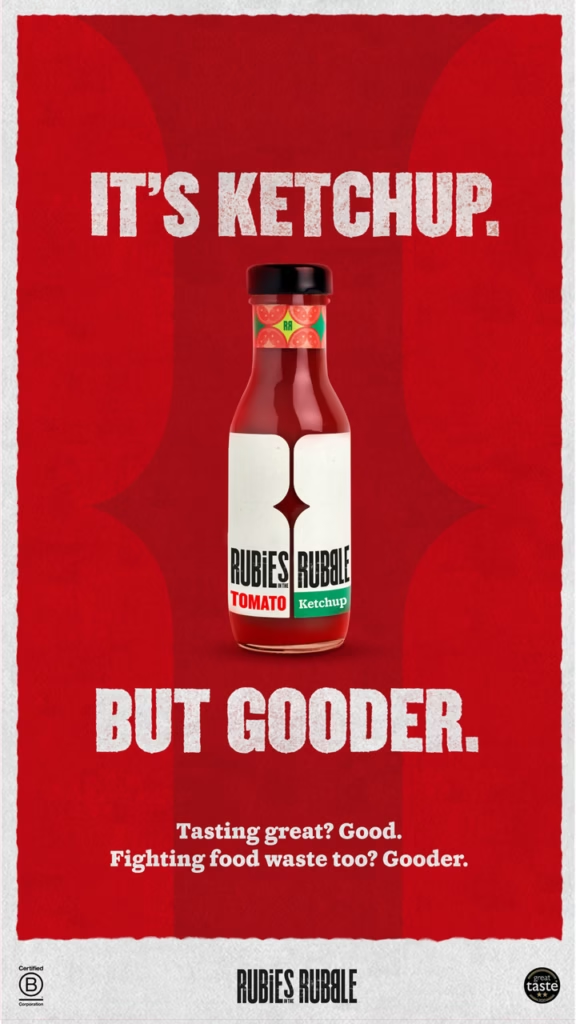
What's good about it
How to use this for your brand
As a challenger brand, you're already being compared to the market leader in the customer's head the moment they see your product.
Which is exactly why comparative words are so bueno.👉 Research in the Journal of Advertising found that comparative advertising for a new brand has a significantly more positive effect on purchase intentions than non-comparative advertising.
In other words, as a challenger brand or emerging brand, owning that comparison to bigger competitors is one of the most effective things you can do.
However, there's some nuance to it.👉 Research also shows that negative comparisons — AKA "we're better than the big brands" — puts people in push back mode. Seeing a small brand say stuff like that makes our brains go "no way, mate" or "how is that possible?". It primes our brains into BS mode.
However, positive comparisons — exactly like "it's ketchup, but gooder" — is a format that our brains are chill with. Our brains go "you know what, Heinz is a bit vinegary. I can see how they can improve it".
And that's exactly the move to steal.It's [category]. But [comparative].
It's protein powder. But it doesn't taste like chalk. It's a bank. But one that's actually on your side. You can even use the technique to have a little jab at a specific competitor. Tenzing, for example, could say something like:We won't give you wings. But you also won't crash at 3pm.
That's exactly the same technique in action. So, whatever way you're doing things differently, using the current market leader as a baseline and then leap-frogging them with your copy is super smart. Give it a go.