Do Words Good — Swipe File
dowordsgood.com/copywriting-swipe-file
Bloom & Wild
BLOOM & WILD’S THOUGHTFUL MARKETING COPY
What's good about it
We loved B&W's first opt-out campaign.
We love their new approach even more.
Big, big fans of everything they do.
How to use this for your brand
Bloom & Wild have always had this almost mind-boggling ability to absolutely nail copy that feels empathetic and real and like it dodges the 100-or-so tricky nuance-y pitfalls all at the same time.
In 2019, they'd been getting loads of emails about finding Mother's Day content tough, so they were the first brand to offer customers the chance to opt out of Mother's Day marketing. And pretty soon, lots of brands were doing it. Which is great, we love brands doing better. Except, too much of a good thing... Suddenly, the period of grief-triggering emails that was getting sent out widened. Mother's Day wasn't just a week of marketing anymore. It was an extra week of "Hey, we know Mother's Day might be tough..." emails. That window of salt in the wound got worse, not better. In fact, Dr Liz White, a Consultant Clinical Psychologist, said of these emails: "Often people experience what feels like a mismatch and confusion between the head: what I know to be true (my dad died) and the heart: what I feel (it doesn't make sense my dad isn't here anymore). These emails jolt you into that truth and by actively unsubscribing, it is as though you are admitting this truth to yourself: the head and the heart have to align, and this is deeply painful and brings to the fore the sadness of the loss no matter when it was." In other words, your opt-out email, despite being incredibly well-intentioned, might be reminding the person of the pain you're offering them the chance to not think about. It's weirdly paradoxical.But, in classic Bloom & Wild fashion, they solved this paradox too.
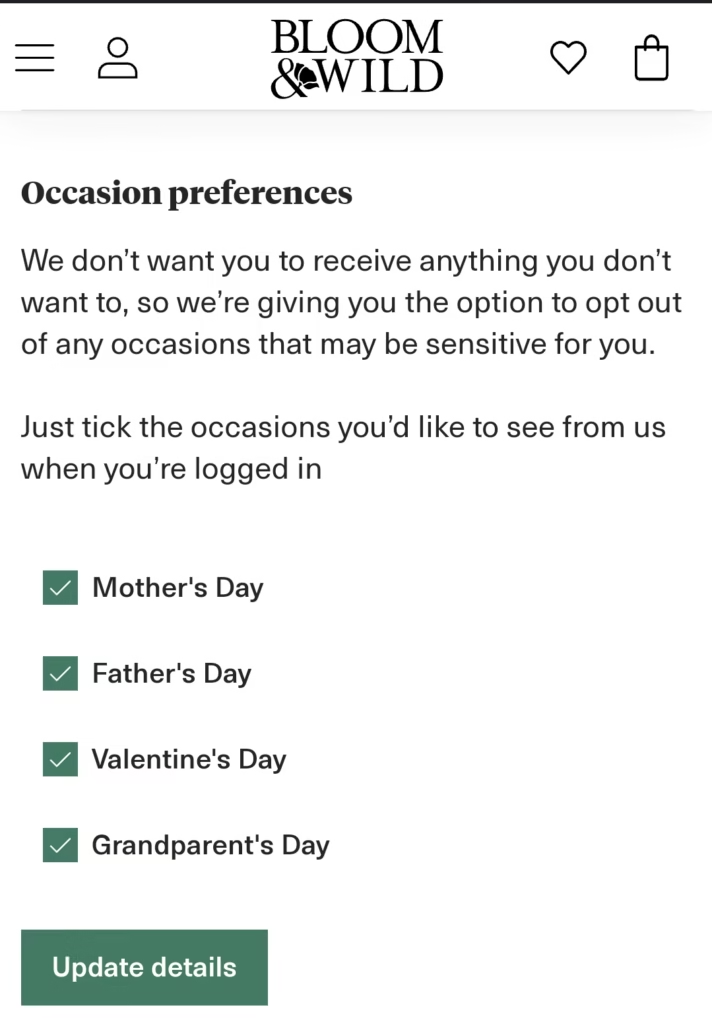
We mean, just check out that opt-in page.It doesn't ask what you want to avoid but what you'd like to see. You're not actively unsubscribing from anything, you're just kinda curating the emails you want to get.
It's a subtle difference, but it's based in a psychological concept of active and passive avoidance. Active avoidance requires you to take action, which always involves some degree of confronting the thing you're trying to avoid. So even saying "I don't want Mother's Day emails" is, in and of itself, an act of confronting the thing you don't want to confront. Passive avoidance is the opposite. You just kinda passively don't see something. There's no active confrontation of the painful stuff. There's also the concept of approach framing versus avoidance framing at work here too. "What would you like to see?" is approach-framed. "What would you like to avoid?" is avoidance-framed. And the research consistently shows approach-framed choices feel less emotionally costly than avoidance-framed ones. And the best bit? It's one-and-done at the start of your Bloom & Wild journey. You make these decisions and then they're locked in forever. You don't need to handle it every year (or several times a year). TLDR: they've managed to minimise the impact of what is often an emotionally taxing moment for people by changing the framing, the copy and then locking that decision in. It's so goddamn smart. We love it. Nick this for your brand: normally, we have a more high-level take where we show you how to steal the concept. And yeah, if you're writing about sensitive topics of any kind, it's a good idea to ask "am I making this worse by talking about it?" But the real pro tip is this: if you can, just pinch Bloom & Wild's opt-in approach to sensitive emails. It's just that good.