Do Words Good — Swipe File
dowordsgood.com/copywriting-swipe-file
Minor Figures
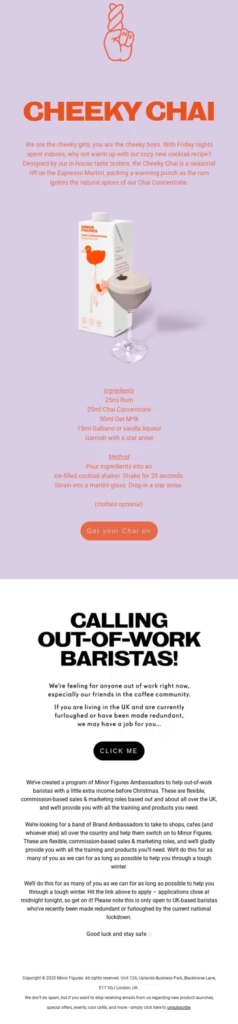
MINOR FIGURES’ BANGING PANDEMIC EMAIL
What's good about it
Any email that opens with a Cheeky Girls reference immediately gets a spot in this swipe file for life.
(Also acceptable: S Club 7, Ronan Keating or Ainsley Harriot references.)
PS. The export went a bit wonky and doubled up some of their copy. Ignore that.
How to use this for your brand
Our abiding love of a good nostalgic pun aside, check out the range of stuff that this email talks about.
It opens with some fun, brand-building copy. Then it's a cocktail recipe (very pandemic-coded). Then it's talking about redundancies and furlough and the pandemic.
And yet, the Minor Figures voice never really wavers.
A lot of brand voices are really just a marketing tool. They'll show up on product pages and welcome emails, when the brief is fun and the stakes are low.
But the moment the brand has to say something grown up or serious, the voice goes up in smoke. Suddenly it's "as a brand, we feel" or "in these unprecedented times".
But the best brand voices are built to flex and adapt without ever losing that you-ness.
Because, ultimately, brand voice is just your brand personality put into words.
And if your brand drops its personality to deal with something serious, you're basically telling your customers that the voice was never that real to begin with. It was all a marketing trick to get you to buy stuff. And customers hate that. (No duh.) The fix? Creating a brand voice that is built around your brand's POV and worldview rather than a set of stylistic quirks. Because "we're funny, conversational and down to earth" is very easy to follow for headlines. But if you're writing about a global pandemic, it's a little harder to be cracking wise. Instead, if your brand voice is built around what your brand actually believes (like, say "we believe coffee culture should be for everyone") then suddenly you've got something that works at every altitude. It works for a cocktail recipe. It works for a job offer to a struggling barista. It works because the belief is still true regardless of what you're writing about. Sure, the tone might shift a bit. They dial things up or down or tweak them. But that point of view stays the same. And that's what people are drawn to. Not your tone, per se. In a weird way, you have to stay consistently inconsistent. Now, we won't pretend we can give you one quick exercise and you can figure out your entire brand voice. But here's a good place to start: Write down "We believe that..." and finish the sentence. Don't make it a mission statement or about your brand values. But the big, one sentence version of what your brand's big POV is. Then, ask yourself: if somebody believed this in real life, how would they act? What would they say? Then ask: how would they change the way they spoke depending on who they were talking to? How would it flex? Boom. There it is. That's the kernel of your brand voice. PS. This is a shameless plug, but we've got more exercises to help you figure out your voice in our free brand voice email course. You can sign up right here 👇