Do Words Good — Swipe File
dowordsgood.com/copywriting-swipe-file
Who Gives A Crap
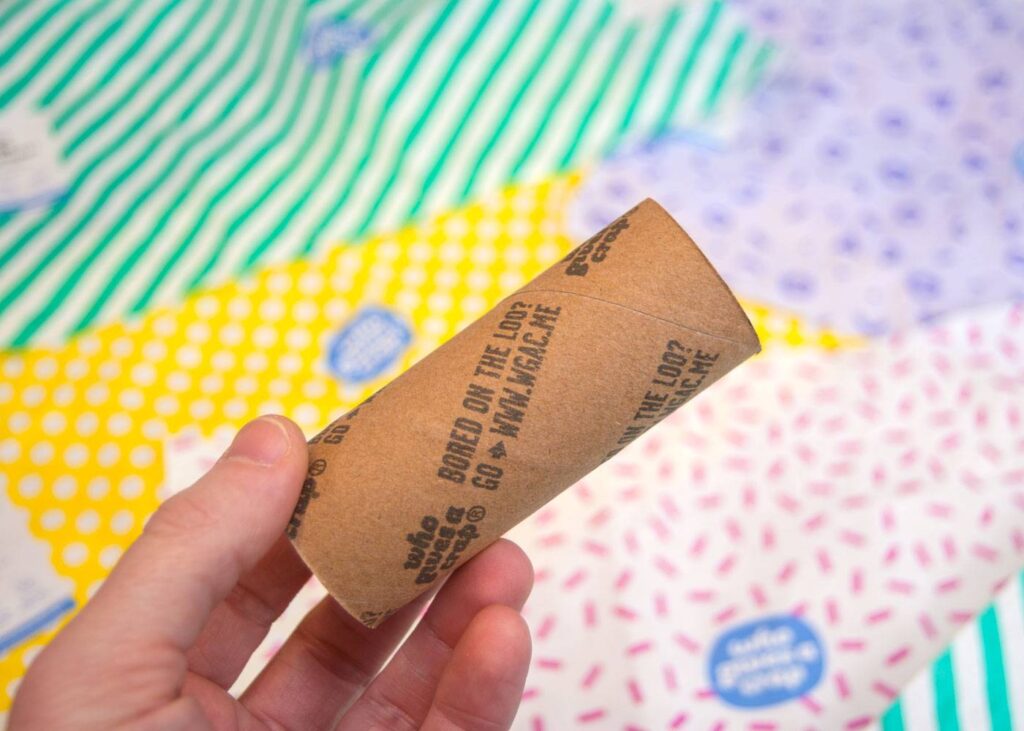
WHO GIVES A CRAP’S *SUPER* IMMATURE EASTER EGG
What's good about it
Fair warning: this who thing is so puerile that we almost didn't include it.
But, come on. It's just too good.
How to use this for your brand
We hate to say it, but some products just aren’t sexy, no matter how much you try.
Toilet paper. Mattresses. Kitchen roll. Washing up liquid…
The copy for these kinds of products has to work extra hard to compensate for that almost invisible, awkward or everyday quality they have baked in to their brand.
And so, most brands take one of three routes:
👉 They hide the awkwardness behind euphamisms and soft language. Think cute pandas or puppies, talk of ply and lots of bouncy, floating language.
👉 They get hyper-mission-led. By leaning hard on their impact and mission, they get to tip-toe around the awkwardness of their product.
👉 They go so super positive that they end up coming off as a bit fake and contrived. (Have a happy period, anyone?)
And while none of these are bad, per se, there is a better way.
Use your brand voice and humour to meet the discomfort head-on and change the conversation.
You can take a taboo or embarrassing product and make it feel safe, funny, and even empowering just by using your brand voice.
And when you do that, three things happen:
1.Your brand feels more trustworthy (by being honest about the thing everyone else avoids)
2. You make your customer feel seen (because you’re talking about the things they feel, not the things they’re supposed to say)
3. You become unforgettable in a space where everyone blends in or hides their products.
☝️ And no brand does this better than Who Gives A Crap.
And while hiding a link to something called Fart-A-Palooza on their toilet roll tube might be the kind of thing that some people find a bit puerile and immature, Who Gives A Crap's whole brand is built around addressing the elephant in the room.
Their website, their ads, their everything talks of bums, cracks, farts, poo... as well as their eco creds.
They make Spotify playlists for different types of trips to the toilet.
It’s a bit gross and a bit childish and a bit silly.
But it’s never too much and it’s never offensive. And it’s always eyeball-grabbing.
So how do they manage it?
If we want to get all nerdy, Who Gives a Crap nail their humour by tapping into something called Benign Violation Theory.
This was an idea developed by psychologists Peter McGraw and Caleb Warren in 2010 to try and answer the question: what makes something funny?
Their theory says that for something to be funny, these two conditions need to happen at the same time:
- It has to violate some kind of norm (a social norm, a moral norm, a linguistic norm, etc.)
- It has to feel safe or “benign” (AKA not threatening or offensive)