Do Words Good — Swipe File
dowordsgood.com/copywriting-swipe-file
Jack Daniel's
JACK DANIEL’S OH-SO-READABLE TUBE ADS
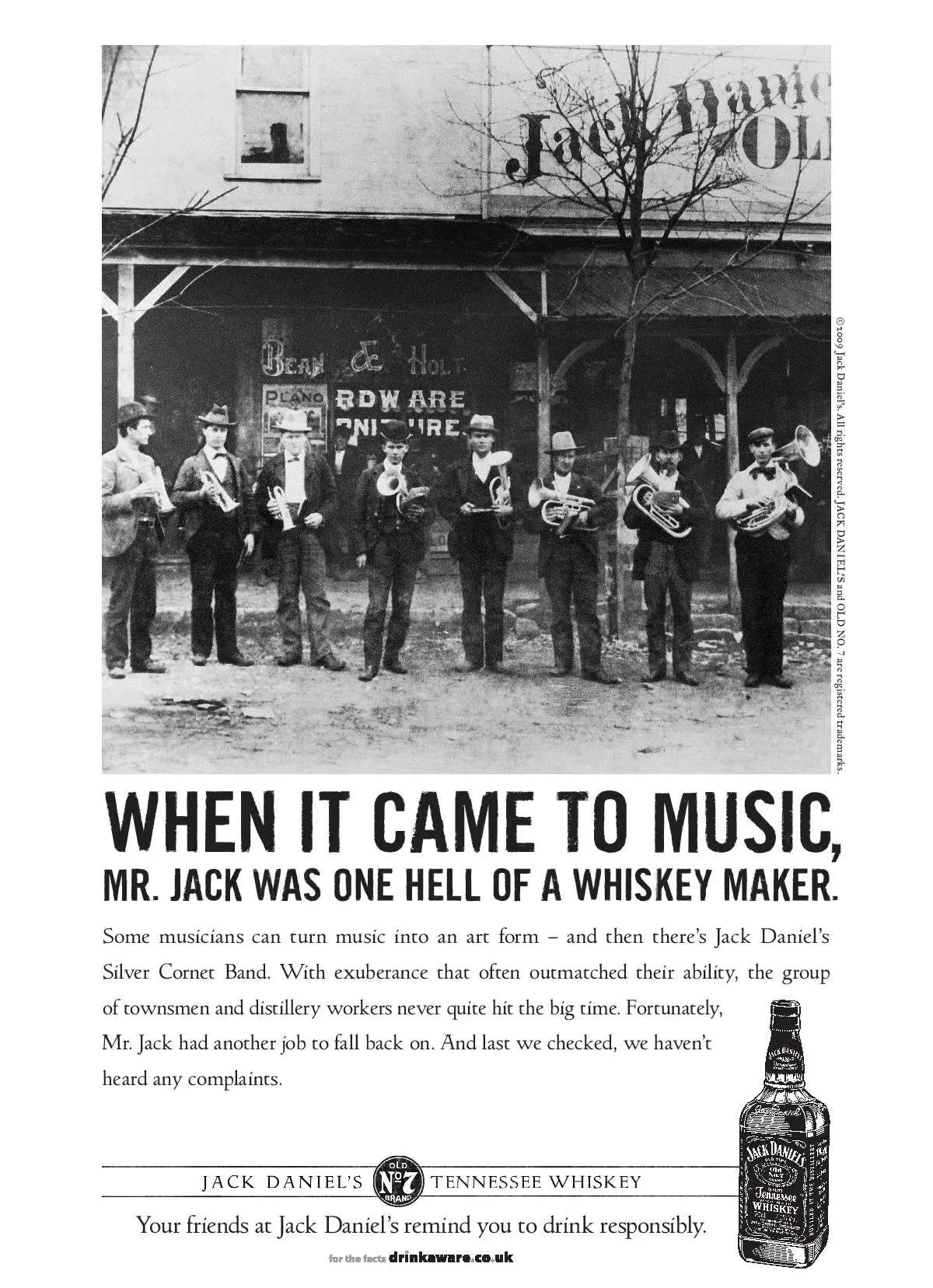
What's good about it
Reading Jack Daniel's ads while waiting for the tube to uni is what made Jack want to be a copywriter.
So, as cliche as it is, we had to include one in here.
How to use this for your brand
We could talk about brand storytelling here. Or tone of voice. Or teaching customers things.
And all of that is true.
But the thing we find most interesting about Jack Daniel's ads is just how damn readable they are.
Compare the average JD ad to the average tube ad.
It's like 60-100 words vs 10 words.
Yet, which ads do people stop and read? The JD ones.
That's not an accident.
Have you ever seen some copy on a website or an ad on a train where the copy just feels like it has a life of its own?
Where it almost feels like you’re pulled along with the words rather than consciously reading it?
On the flip side, have you ever written a first draft where it’s ticking all of the boxes but still feels a bit meh?
You’ve nailed your brand voice, you’re hitting those pain points, you’ve made sure you’re grabbing eyeballs with your messaging…
But something about it just feels off?
When that’s the case, the culprit is almost always the rhythm and flow of the copy.
You see, we can all get so laser-focused on the mechanics of copywriting — the pain points, the headline formulas, the consumer psychology, the brand voice — that we forget that our first goal is to make sure our copy actually gets read.
And our brains bloody loves rhythm.
If we asked you to recite a quote from your favourite childhood book, it’d probably take you a minute right?
But if we asked you to tell us a nursery rhyme, you could do it in your sleep.
That’s because we’re naturally drawn to patterns and rhythms. They stick in our brains.
And when copy doesn’t have a natural rhythm — or the rhythm is dull and monotone — it does the opposite. We glaze over and switch off.
That's backed up by consumer psychology, too.
👉️ It’s not just that copy with a rhythm is stickier. Studies show that rhythmic patterns activate neural pathways linked to pleasure, memory, and persuasion. In other words, words that flow make us feel good, make us remember better and are more likely to win us over.
👉️ There’s also something called processing fluency, which is the idea that when something is easy to process, we perceive it as more credible and appealing. Again, making it more likely that we’ll reach for our wallets and hit that buy now button.
👉️ And, last of all, clunky copy takes us out of System 1 thinking — that flow state where we make quick decisions to buy stuff — and puts us into System 2 thinking, AKA, the analytical, “I’ll go away and think about it” mode of thinking.
In other words: good rhythm and flow = good vibes = more sales.
So next time you're editing your copy and it doesn't feel right, take a look at the rhythm. Does it feel monotone? (AI copy is real bad for this. It loves to write lots of sentences that are all the same length.) How can you add a bit of bounce to the language? Shake up the words, vary the sentence length. Do a long sentence followed by a super short one. Ramble a bit.
And, if in doubt, read it out loud. You'll immediately spot where the clunk is.
PS. We call our crappy first drafts "guilty feet drafts". Here's why.