Do Words Good — Swipe File
dowordsgood.com/copywriting-swipe-file
Nice Drinks
NICE DRINK’S SNEAKY SMART CATEGORY MOVE
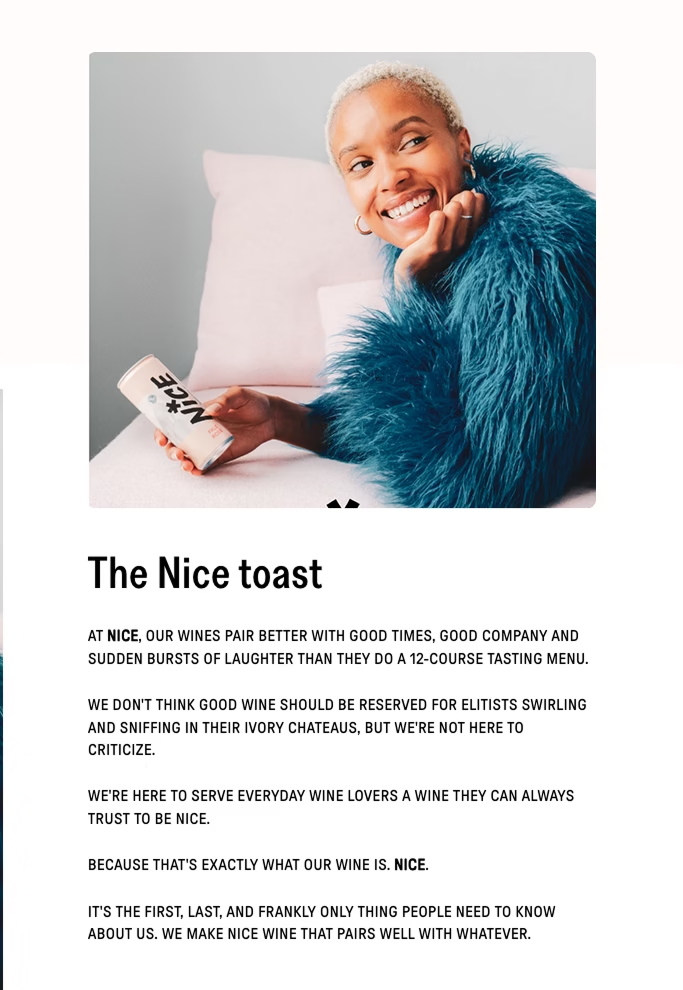
What's good about it
This bit of copy should be setting off all the alarm bells for us. (It's all we, we, we...)
And yet, it's doing some really, really clever stuff and timely that's coming up in a lot of conversations with clients at the moment. So it went straight in the swipe file.
(Also a good remind that best practices are just that. They're rules of thumb, not commandments.)
How to use this for your brand
This is a great example of copy based on the idea of occasion-based segmentation, which basically says that in higher-frequency categories (AKA, impulse purchases), it's the occasion that people are buying your product for that makes a bigger impact on what they buy than things like their identity, etc...
In other words, the drink, snack or treat-y thing we buy for a Tuesday night on the sofa is completely different to the one we'll buy for a Friday night with friends or a Sunday lunch with family.
And that means that your competition shifts too.
The drink you're competing against for a Tuesday on the sofa might be other wines, but the drinks you're competing against for a BBQ might be an RTD cocktail or a beer or even just a fancy sparkling water.
(There's this popular true-ism that Netflix's competitor isn't Amazon or the cinema, it's sleep. We're not wild on it, but it's a handy little nugget to reframe this idea in your brain: you're fighting against what people choose for that moment, not just your competitors.)
And that's the really clever thing about this bit of copy.
You see, there was an easier way to achieve the same outcome and that was to go full challenger mode. To say that wine is too snobby, too focused on notes, etc... but Nice is just here for the good times.
And they do a little bit of that. (And we're not sure the copy needs that bit at all.)
But this copy reads like they know that in different settings, their customers are probably buying those same wines. They might even talk about the notes and what it's like on the nose and all that.
So by swinging against the wine industry, they'd be actively dissing some of their customers.
So they couch it with a "but we're not here to criticise" and then pivot to their brand being wine that can be enjoyed anytime and also a brand that you can trust to be nice.
Which again, is wicked smart, because there's a concept in consumer psychology called satisficing, which basically says that for products like canned wine or beer or snacks, we don't hunt for the best possible option. We just find something that satisfies and suffices at the same time.
Basically, a 6/10 is good enough for impulse or occasion-based shopping. We're not always hunting for a 10/10 product.
That's because the cognitive cost of finding the perfect wine for a BBQ isn't worth it, especially when the risk of getting it wrong (turning up with something undrinkable in front of your friends) is so much more pressing than the upside of finding something banging.
(Research in Marketing Science found that in repeat-purchase categories, loss aversion is roughly twice as powerful as gain-seeking. We shop to minimise risk, not gain something more.)
In fact, Byron Sharp and Andrew Ehrenberg's analysis of FMCG buying behaviour across decades found that in high-frequency categories, we don't choose based on deep preference or brand affinity, we choose based on mental availability. AKA, we buy the brand that comes to mind first at the moment of purchase, not the one we've thought hardest about.
Ehrenberg-Bass called the triggers that bring a brand to mind Category Entry Points AKA the occasions, moods and moments that activate a purchase.
In other words, one of the keys to FMCG growth is to be linked to as many of these Category Entry Points as possible so that your brandcomes to mind across the widest range of buying moments. Which means there are two really clever things you can pinch here: What occasion does your customer buy your product for? How can you use your copy to tie it to that? Then ask: what's the risk your customer is trying to avoid in that moment? How can your copy minimise that risk? Do both of those things in your copy and you're doing what Nice do here: priming customers to buy your brand in different occasions. Smart.