Why we love this
 Why we love this
It’ll come as no shock that we bloody love Patagonia here at DWG.
They basically wrote the playbook on being a mission-led brand. (And they’ve been on our dream client list for years now.)
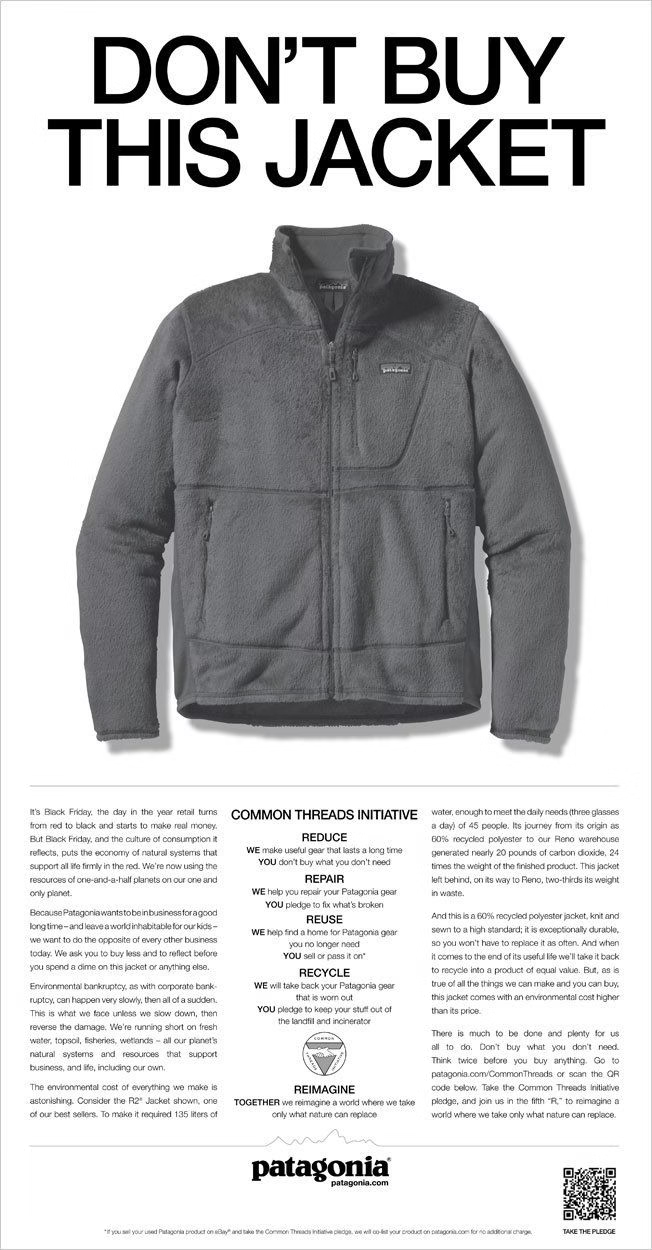
And they ran this full page ad in the NYT on Black Friday in 2011, while every other brand was promoting a big sale or discounts.
Absolutely love it.
Steal this for your brand
This ad works because it opens a loop in our brains. We read "don't buy this jacket" and our brains immediately go "huh?!" (Especially on a day like Black Friday.)
And that is one of the oldest attention-grabbing tricks in the book. (It's basically Bart Simpson's SEX! Now I have your attention poster.)
And it's built on two bits of behavioural science:
👉 The first one is called the Zeigarnik Effect and it basically says that our brains remember uncompleted tasks more than completed ones. (That’s why an unchecked box on your to-do list will wake you up at 1am.)
👉 The second one is the Information Gap Theory, which says that we’re basically hardwired to want to seek out information to “close the loop” on answered information. (Which is why we absolutely need to watch the next episode of a TV show, even when we know we should probably hit the hay.)
Which means that, functionally, Patagonia's "Don't buy this jacket" and every Buzzfeed "You won't believe number 7" headline are doing the same thing.
Yet one feels like it's a rug pull. And the other one is probably Patagonia's most celebrated ad.
So what's the difference?
It's that Patagonia deliver on the promise that their bait-y headline makes.
And that's the key. A 2023 study found that clickbait headlines that don't deliver on their promise actively erode brand trust. The curiosity gap works. But if you open a loop and then close it with thin, vague crap, customers feel cheated. And that feeling transfers directly onto your brand. You'll always get the click with cheap tricks, but you lose a customer's trust.
That's why Patagonia close the loop with something valuable and interesting. They talk about environmental cost of production, and their repair and recycling programmes. Once you've read that, you're like "oh, OK. I can just repair my jacket." It doesn't feel rug-pull-y.
There's more going on too.
A 2025 study of nearly 9,000 headline experiments found that the most clickable headlines hit a sweet spot of specificity: not too vague, not too detailed.
If you got too vague, customers don't have enough to care. Too specific and they feel like they already know the answer and won't click. The sweet spot is just enough information to make the gap feel tantalising, but not enough that they can close the loop.
“Our eco detergent uses enzymes to clean better without toxins.” is fine. But it's not going to get clicks.
“It’s like a probiotic for your laundry.” opens a loop. They have a bit of information, but not enough to really get it. That makes our brains need to know the answer.
Nick this for your brand: what does your brand believe that runs counter to how most brands in your category think? What's the counterintuitive truth about your product, your process, or your mission? What's a way of phrasing your USPs or brand positioning that feels surprising? Try using those things to write some top of funnel headlines that give your customers just enough information to feel intrigued.