Why we love this
 Why we love this
We know there’s a huge amount of irony that something in a copywriting swipe file contains almost zero copywriting whatsoever.
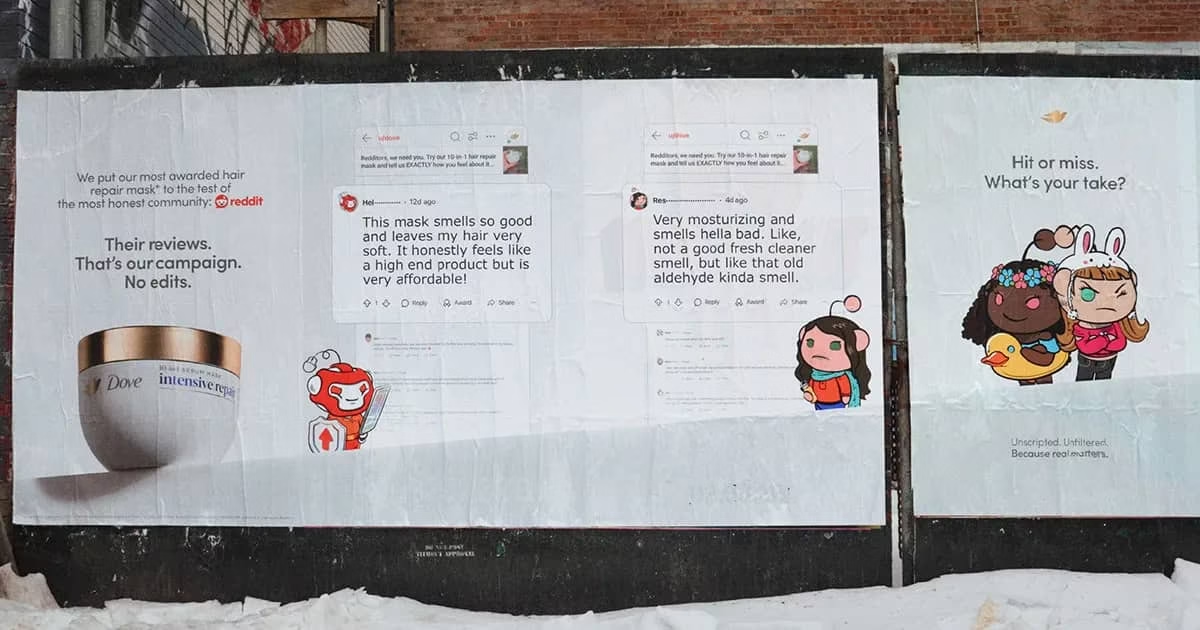
But, as per usual, Dove have killed it with this OOH ad campaign based around real, unfiltered feedback from reddit users about their products.
And it's kinda copy, in a way. Maybe. Ish.
Steal this for your brand
A few months ago, Dove plastered a huge OOH campaign of unfiltered reddit comments about their brand.
Some were good. Some were meh. Some were bad.
And, importantly, they didn't try to explain away any of the bad ones at all.
And while it's bold as hell, it's also based in some really clever consumer psychology.
👉 In July of last year, Duke University, Wisconsin and HKU published a study that specifically looked into the impact of brands sharing insults and bad reviews. And across multiple lab studies and a field experiment on Meta ads, they found that, without fail, brands that reappropriated mild, unfair insults were seen as more humorous, more confident & mentally tough and generated higher click-through rates.
👉 Research shows that brands with a mix of good and bad reviews are seen as more trustworthy than brands with only glowing feedback, because the imperfections signal “real people with real opinions” rather than a PR machine.
👉 Brands owning their flaws makes us think “this brand is probably a safe bet.” Taking a reputational risk (like repeating a bad review in your own ad) is a classic trust signal, because brands only do it if they’re confident in the quality of their product. And time after time, bold ads like these outperform safe, trust-building ads.
And that’s before we even mention the free visibility of it all. (This ad campaign generated a tonne of press and publicity.)
But our favourite thing about this campaign is how this is incredibly on-brand for Dove.
It’s that big thing we come back to again and again about how the best brands have a worldview that they don’t budge from.
For Dove, that worldview is all about keeping it real.
And in an age of positivity-for-pay UGC and cherry-picked user reviews, Dove continuing that manifesto of “we’re going to show and tell things how they really are” is huge not just for standing out, but for customer trust.
On top of that, it cuts through the noise in a sea of overly polished beauty ads and we-didn’t-ask-them-to-say-this-we-swear UGC videos. (Von Restorff, baby!)
It’s sticky. It’s rooted in consumer psychology. It’s clever as hell. And it’s 100% on-brand.
So we obviously absolutely love it. No notes.
Steal this for your brand: while this big, in-your-face approach to sharing the good and the bad might be too risky for you, you can still do the smaller version of it and share some bad reviews as ad creative (which can boost CTR by 27%).
Here’s a guide to creating your own bad review ads (and dodging the pitfalls) we wrote last year.