Why we love this
 Why we love this
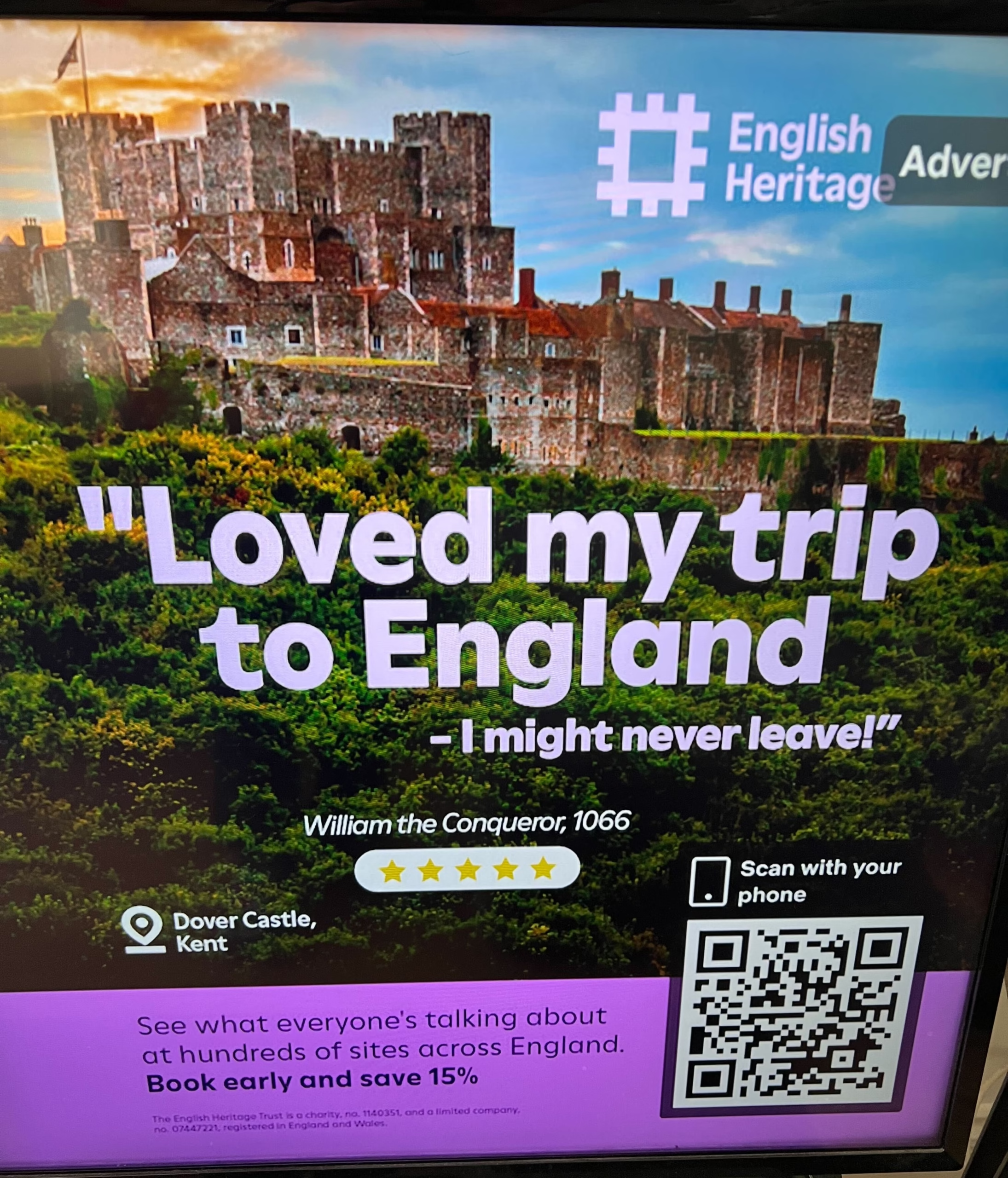
Fun fact: the two of us grew up in Kent and once spent a summer day at Dover Castle dressed as Normans hitting a bunch of other kids with pipe-lagging to reenact the Norman invasion. (It was a proper, English Heritage-organised event, too. The 90s, man)
So we've got a soft spot for the place already.
But this ad (hastily snapped from Joe's PC while he ate his lunch) is a banger, so it definitely belongs here.
Steal this for your brand
It can't be easy for a castle built in 1066 to stay relevant. (Which is probably why lots of history and history-adjacent advertising says "step back in time!" or "spend the day as a Tudor".)
Absolutely irrelevant tangent time: this is self-indulgent as hell, but if you clicked this ad, I reckon you like castles. So, if you haven't already been, get yourself to Warwick Castle ASAP. There's a working trebuchet, dungeons and live jousting tournaments. It's awesome.
Anyway, back to the ad.
So, there's obviously the clever fake review format that makes you want to read the ad. (Because studies show we're drawn to reading reviews because we're a bit nosy like that.)
But the thing we love the most is that this ad finds a history joke that almost everyone will get but writes it in a way that makes everyone feel clever for getting it.
And because it doesn't spell the punchline out, it triggers what psychologists call the Generation Effect, a trick of the brain where we remember things better when we have to work to get to the answer ourselves. That slight delay between reading and "oh! I get it!" makes our brains commit it to memory.
And because that gap also makes us feel clever, we're more likely to share it with friends too. (In fact, in Jonah Berger's Contagious, which is all about which ads and ideas go viral, he specifically identifies social currency as one of the main drivers of word-of-mouth. Basically, we share things that make us look good for knowing or "getting" them.)
Basically, it's making a joke that everyone should get feel like a little in-joke between friends. It creates intimacy and a bond between English Heritage and the reader.
And that's really smart, because studies consistently find that brands with high intimacy scores (AKA, how much they feel like a customer's mate) outperform on revenue, loyalty, and willingness to pay a premium.
SMART. Really smart.
Steal this for your brand: if you're going to make a joke or a cultural reference, make it just obscure enough that people feel clever for getting it. Or feel like they share the same cultural references as your brand. Or if you go obvious, undercut it somehow.
The trick is to make the reader feel like it's a little in-joke between the two of you.
See also: Surreal do this really well. Skyscanner too.