Why we love this
 Why we love this
We're massive fans of the way that Grind seem to nail walking that tightrope between a proper coffee roaster, sustainability powerhouse and accessible, on-every-shelf-in-every-shop coffee brand.
On a messaging-level, that's a really tricky thing to juggle.
And they absolutely nail it.
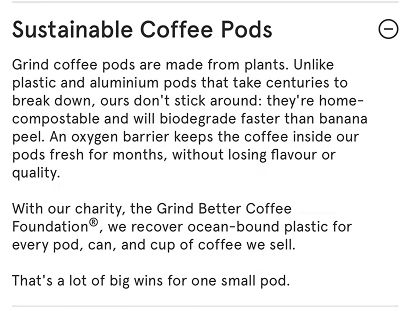
This little detail in their FAQs might seem small, but it's a sign of a brand that absolutely knows what it's doing.
No notes.
Steal this for your brand
There's a couple of things going on in this 70-ish words that are doing a lot of work.
You've got some thumbing of their nose at the bigger coffee brands that don't have biodegradable coffee pods. You've got them handling the objection of "OK, great. But will it keep my coffee as fresh as aluminium?". And you've got the feel goods of recovering plastic from the sea.
Really smart stuff.
But our favourite bit is this: "they're home-compostable and will biodegrade faster than a banana peel".
Now, a lot of their competitors offer biodegradable, home-compostable pods too. But a lot of those brands are sustainability-first in their messaging, so they attract people who know their stuff. A lot of Grind customers come from supermarkets or their collaborations.
And that means that they're not buying for the sustainability. (They still care, but they're not buying Grind for its eco creds.)
And so when they see "Home-compostable" on its own, it reads like any other sustainability claim. (And lots of brands are making those.)
But telling them it will "biodegrade faster than a banana peel" is completely different. That's tangible. We've all left a banana in the fruit bowl for a bit too long and seen a banana go bad like that *clicks fingers*.
Suddenly, we can picture just how quickly Grind's pods will biodegrade. We're not just being told they're biodegradable.
That's really clever.
It's not just that research published in the Journal of Consumer Research found that concrete, specific language increases purchase intent and customer satisfaction (because customers infer that a brand using specific details is actually paying attention, rather than producing generic marketing). This is doubly the case for green and eco messaging.
It's also that it's empathetic as hell to their customer.
And that ability to make a customer feel more knowledgeable and clued up is massive. Studies show that brands that teach customers new things or open their eyes experience much better customer loyalty and word of mouth. (Because we like to feel smart and to tell people things we've learned.)
So next time you're writing copy about something kinda abstract, try and make it specific. And if you're doing something kinda scientific or clever, make the explanation of why it matters specific.
Here are a few examples to get you started:
"Make a dinner in 30 minutes or less" becomes "Make a dinner in less time than it takes to watch an episode of The Simpsons."
"Contains ceramides to protect your skin barrier" becomes "contains ceramides that act lock your skin barrier together so it holds the moisture in".
"Notes of cherry, plum and dark chocolate" becomes "tastes a little bit like a fancy fruit and nut bar, with just a hint of those fancy kersh cherries you only eat at Christmas".
If you're still not sure, paint a picture of what your product does that they can imagine. They know how long an episode of The Simpsons is. They can imagine something locking their skin together. They know the taste of a fruit and nut bar.
It's such a simple trick, but it makes copy so much more effective.