Why we love this
 Why we love this
Jack is a big fan of fermenting stuff. And buying fermented stuff. (He usually has at least one weird experiment fizzing and bubbling away.)
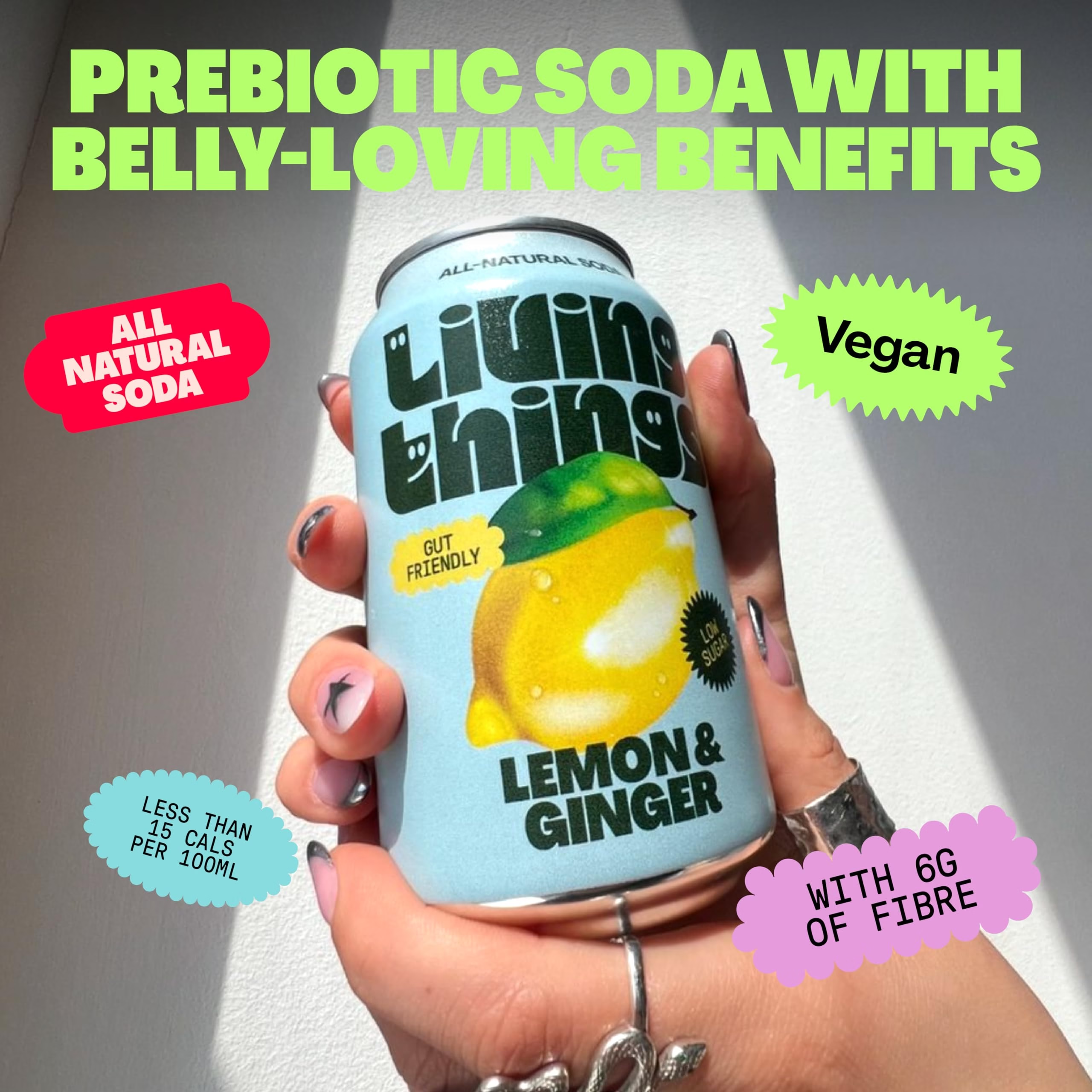
And while this ad might not be set the world on fire, we absolutely love that phrase "belly-loving".
It's so deceptively clever. No notes.
Steal this for your brand
Almost every prebiotic drink, kombucha, kefir and fermented whatever uses the same phrase: gut-friendly.
And that's fine.
Because in an emerging category, you almost have to blend in to a certain extent. Your customers are still learning what your category is and brands having a shared category language is part of how they learn.
In fact, Byron Sharp's research on how brands grow shows that being mentally available means showing up with the signals customers already associate with a category. "Gut-friendly" is one of those signals.
If Living Things ditched it entirely, they'd be fighting two battles at once: educating people about the category and differentiating within it.
But that's what makes belly-loving so clever.
Belly-loving and gut-friendly are the same message.
Yet belly-loving is so much better.
It has brand voice. It's friendlier. And it's actually better, more positive messaging.
Let's break it down:
Your gut is clinical. It's medical. And if we're completely honest, we're not sure most people know what the gut really is.
But belly? Everyone knows what their belly is. It feels real. And tangible. And less scientific.
The same with friendly vs loving. Friendly means "won't hurt you" or "is kinda good for your gut". Loving means "genuinely cares about you" or "amazing for your belly".
One is lukewarm. The other is something amazing.
But the best bit?
"Belly-loving" is an ownable brand phrase in a way that "gut-friendly" will never be.
As Living Things use it more and more consistently, it will become part of their brand language. (It's the same way that "wonky" became Dash's.)
So here's a quick exercise: go through your product descriptions and find every piece of language you have to use because it's what's expected of your category.
Then ask: is there a warmer, more human, more specific version you can say? You don't have to change your messaging.
But what would "protects your skin barrier" look like if you were chatting with a friend? What would "cold-pressed" look like? What would "cruelty-free" look like?
👆 That's where the nuggets of your own brand language live. Suddenly, you don't just have a voice and a way you say things, you have words and phrases that are yours and nobody else's.
You tick all the category boxes and make your brand more distinctive and memorable. And that's huge.