Why we love this
 Why we love this
If you've ever seen Jack, we'll pay you £1000 if you've ever seen his head without a hat.
How he found this copy is no mystery.
Steal this for your brand
Just like we said when we looked at HaloTop, categories have a default language and default framing.
They have sets of words that describe the problem the customer has. They have default framing on whether that's a good thing or a bad thing or a shameful thing or a positive thing...
Hair loss brands talk about hair loss. Weight loss brands talk about weight loss. Debt management brands talk about debt. Skincare brands talk about problem skin. Teeth whitening talks about yellow teeth.
Sometimes, without realising it, brands centre their message around The Big Thing that customers are most anxious about. And in doing so, they remind them of it every single time they interact with the brand.
And it's not hard to see why. Decades of copywriting "wisdom" has taught us that you agitate a pain point to make a sale. Make them feel worse, then sell the solution.
The problem is, a Harvard study of nearly 16,000 people found that negative framing doesn't make people act any more than positive framing does but it does significantly raise anxiety. In other words, reminding customers of the problem doesn't motivate them. It just makes them feel worse. And people drift away from things that make them feel worse.
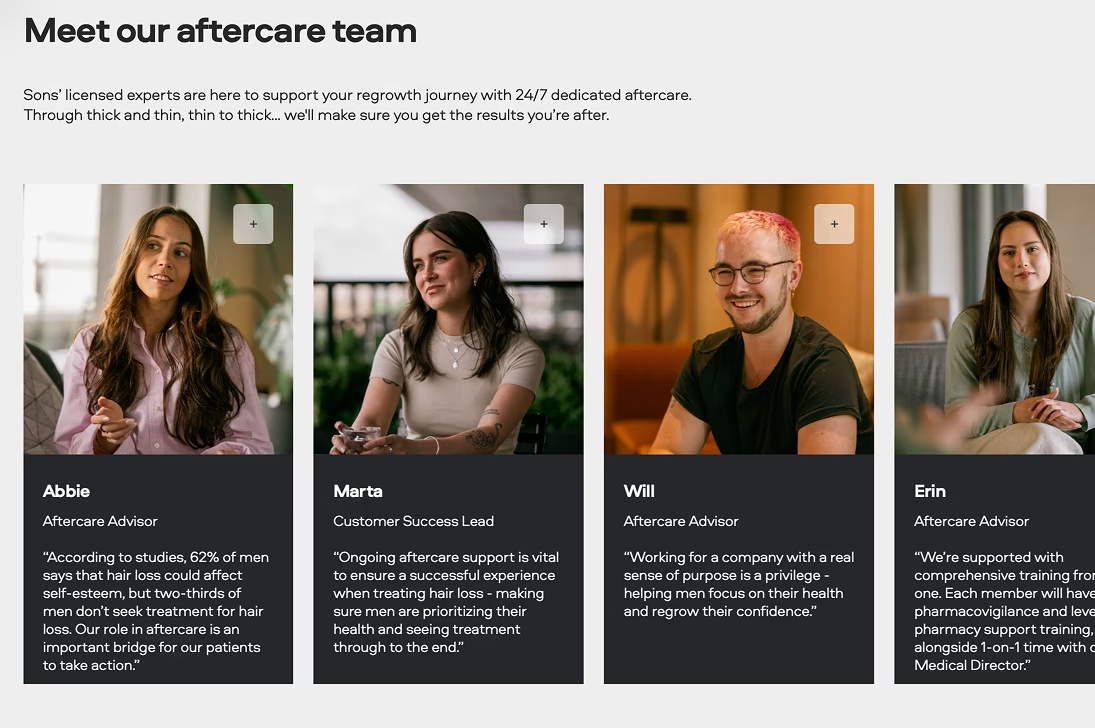
That's why Sons reframe their whole brand language and vocabulary.
It's not a hair loss treatment, it's a regrowth journey. You're not losing something, you're gaining something.
Even the team member quotes talk about "helping men focus on their health" and "regrowing their confidence." The word loss barely appears. The direction of travel is always forward and always towards a better future.
This isn't just feel-good framing either. Research consistently shows that gain-framed messages — AKA ones that focus on what you'll get rather than what you'll avoid — are more motivating and lead to higher engagement and follow-through rates.
And there's even more cleverness going on too.
Research on Identity-Based Motivation found that people are more likely to engage and follow through when they see themselves as active agents heading somewhere rather than passive subjects having something happen to them.
"Somebody losing their hair" is a passive identity. It's about something happening to you. "Regrowth journey" is active. It's something you're doing. And that shift from patient to protagonist in their own story changes how customers feel about themselves every time they engage with the brand.
It's really, really clever.
So cast your eye over your own copy and ask where that category default framing might be sneaking in.
Then ask: what would it look like to reframe that? Not as a euphemism, not as toxic positivity, but as a genuine shift in direction? From talking about what your customer is trying to escape to painting a picture of where they're trying to go. Nail that and it's a game-changer for your copy.