Why we love this
 Why we love this
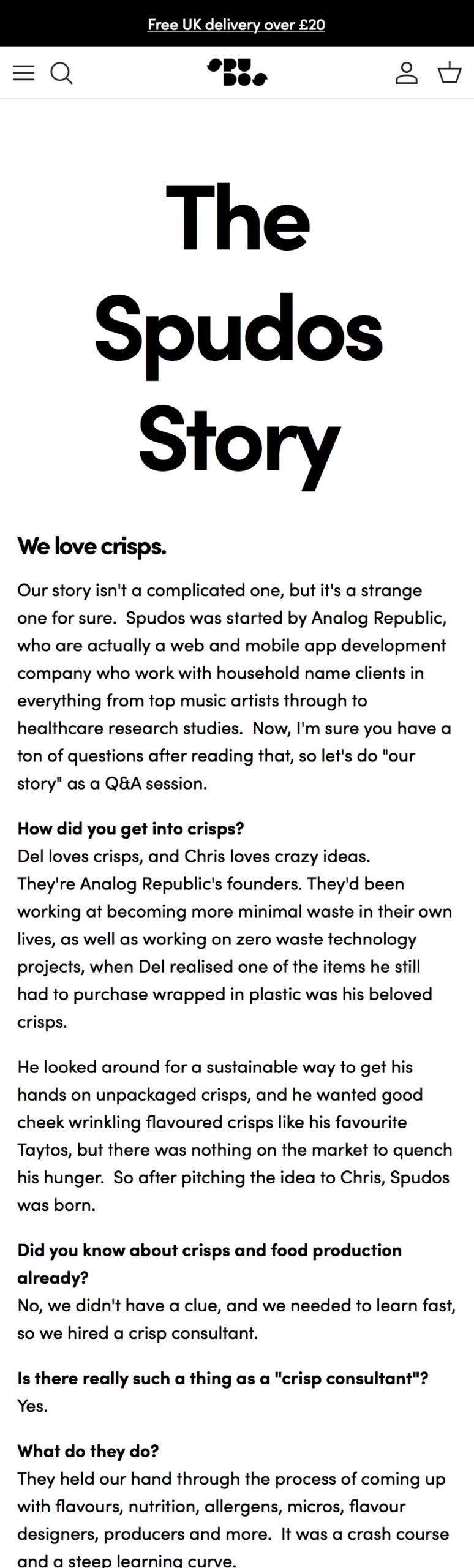
Let's face it, if you launch a brand because you love crisps so much, you've got two fanboys for life here.
But crisps alone aren't enough to get you in the swipe file. What we loved about this was the really stripped back approach to their story page that made it waaaay more engaging (and fun to read) than most story pages we see.
Plus, that crisp consultant line is too good.
No notes.
Steal this for your brand
There's lots we could say about the specifics of this page, but there's actually a really useful lesson hiding in plain sight here: the value of treating your copy like a conversation with your customers.
And we don't mean writing each page as a Q&A like Spudos have.
But half the battle when it comes to copy is deciding what to say and where.
And when you're not sure what to say, it's natural to think "what do we want the customer to know?".
But that's the wrong question. It puts you in broadcast mode. You're writing for your brand, not for your customers.
And the easiest way to switch that up is to think of writing copy like a conversation.
When you're writing a headline, ask: what's the first thing a customer would want to know when they land here? Answer that with the headline.
Then ask: what question does that answer raise? That's your subhead.
Then: once they've read the hero section, what are they wondering next? That's your first section.
And so on.
Now, this isn't 100% foolproof. (Wouldn't that be nice though?)
You'll still have to wangjangle and shuffle some of the messaging about before it goes live, but it gets you pretty damn close.
Plus, this makes sure you structure your copy in a way that lines up with how our brains like to make decisions too. (This is called Construal Level Theory, basically we like to get big picture information first then slowly zoom in. We've written about how Spacegoods and Patagonia use this in the last year or so.)