Why we love this
 Why we love this
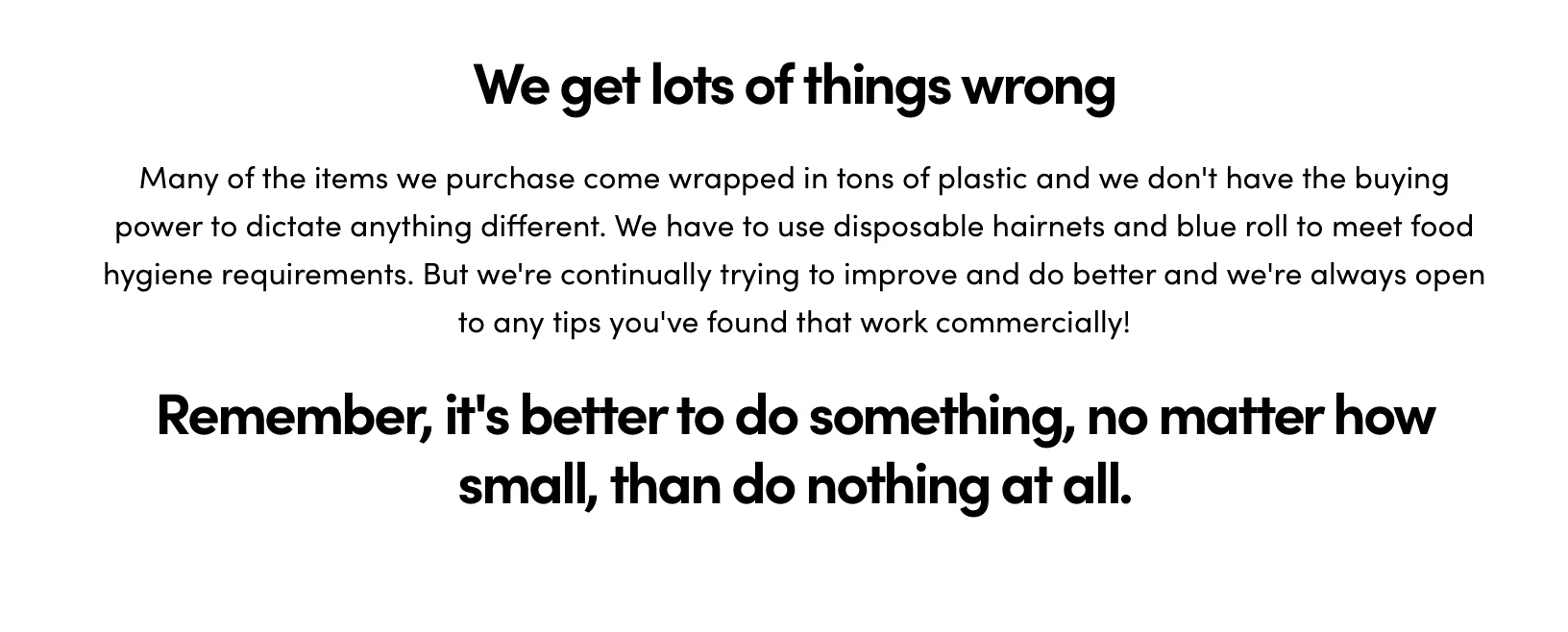
We're big fans of Spudos in general. But this bit of sustainability copy might be our favourite thing they've done.
Steal this for your brand
While this bit of copy might not seem like much at first glance, it’s doing an awful lot of really clever stuff.
Because while there are exceptions (shoutout to the legends at Toast Brewing who also nail that line between being transparent and optimistic), most “green” copy tries to do the same two things:
- reassure you the brand is doing the right thing
- get you to feel good about buying from them
And that’s all well and good.
But a) pretty much every brand is doing that.
And b) when eco claims are used to try and sell a product, the language can easily become too perfect, too sweeping, too broad… which doesn’t just undermine trust in your brand, it puts you at risk of a slap on the wrist from the ASA.
(Which has happened to a few brands lately when the copy on websites wasn’t incorrect or untrue, but was making eco claims that were too broad and not accurate enough.)
Spudos cleverly mitigate that issue by explicitly saying that they’re not perfect.
And on a page where they’re talking about all the good that they do, this little paragraph sets expectations and steers them away that too-perfect trap.
TLDR: the more absolute your claim (“sustainable”, “zero impact”), the easier it is to fall into that trap of accidentally misleading your customers.
(We’re not lawyers, so get your copy checked by experts before it goes live. But this rule of thumb has served us well whenever we’ve worked with brands that do good.)
But there’s another big benefit to this copy, too.
Admitting your flaws alongside your strengths is called two-sided messaging and studies show that it also increases your brand’s credibility and makes your message more believable.
And then, to wrap it all up in a bow, they add that last line.
“Remember, it’s better to do something, no matter how small, than do nothing at all.”
If you’re a brand that wants to encourage your customers to adopt better behaviours, then positioning your brand as perfect and doing everything right can actually backfire on you a bit.
Why? Because it creates this idea that doing everything right is the only way to make a difference.
And on a psychological level, that’s discouraging for customers.
Studies show that perfectionist language often makes people give up habits faster. It triggers that all-or-nothing response in our brains where we think: well, if I can’t do it perfectly then I won’t do it at all.
And then, to top it all off, Spudos have sprinkled in this “we can do this together” attitude that creates this sense of community and togetherness between their brand and their customer that is really clever.
Love it.
(We mean, who doesn’t love a brand that is this passionate about crisps and the planet?)
Steal this for your brand: if you're doing some good (or just trying to do better by your customers), be honest about where it's not going to plan. Explain how you're working on it. Invite customers to reach out, send you ideas, etc...
Customers can sniff out BS really fast. But they love a brand trying to do better.