Why we love this
 Why we love this
Writing copy for gendered days is really, really hard.
And, sadly, most Mother's Day copy ends up doing one of two things. It reduces mums to a to-do list — celebrating the school runs and the packed lunches and the dentist appointments — or it goes so soft-focus and generic that it feels like a Hallmark card.
In fact, research from Peanut found that 94% of mothers feel their identity has been reduced to a single thing since having a child. Just: mum.
But Bloom & Wild are big dogs of writing occasion copy for a reason. They just don't miss.
Check this one out.
Steal this for your brand
We're going to level with you: writing Mother’s Day copy (or Father's Day copy) is really bloody difficult.
It’s not just a copywriting challenge.
You’re navigating language that’s been shaped by centuries (millennia, even) of damaging ideas about what these roles are, what they’re for, and what they’re allowed to want.
And those ideas are so baked in to the way we (as a society) write about gender roles that they often sneak in uninvited, even when you’re writing with the best of intentions and trying to avoid them.
So, when you’re up against a deadline with ten other fires to put out, playing it safe with a “thank her for everything she does” bit of copy is sometimes all you can do.
But Bloom & Wild have found another way. And it doesn't require a degree in gender studies to nail.
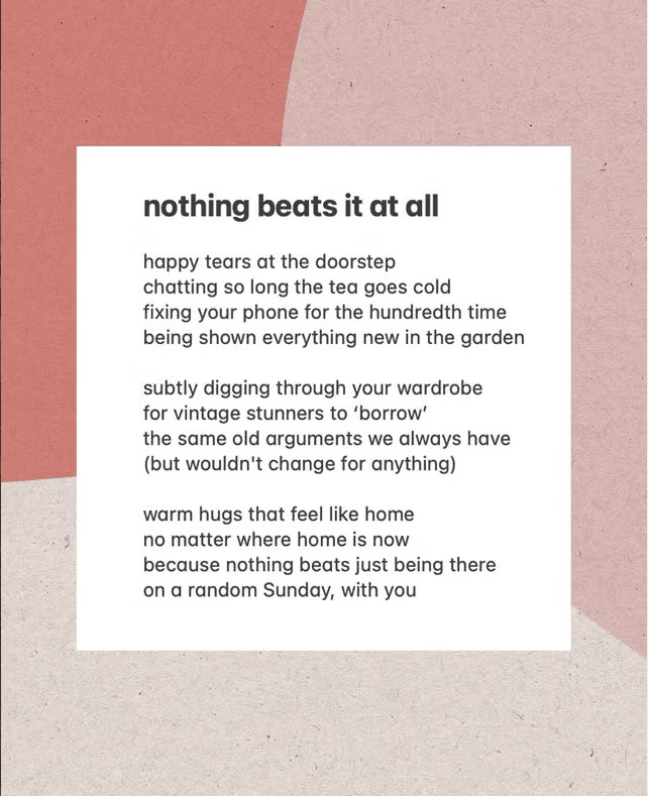
Check out the details in their post: happy tears at the doorstep, tea going cold, the same argument you've had a hundred times...
There's nothing about tasks. Nothing about what she gives up or sacrifices. There's just real details of real people.
But there's also another trick up their sleeve.
Because even if you manage to dodge the pitfalls of writing about mothers, writing good copy that doesn't feel trite is still really hard.
They start zoomed in and they end zoomed out.
Let's be honest, "nothing beats being there, on a random Sunday, with you" isn't the most original sentiment in the world.
And yet, by the time they've painted a mental picture of all of the little details and specificities that make up the relationship (specificities that feel both specific and universal, really smart) that line doesn't feel trite or hollow like a lot of Mother's Day copy.
It feels earned.
So here's how to nick this thinking: when you have to write copy that's tricky, focus on writing about the person and the relationship, not their role or things they do. (This is kinda inclusivity writing 101.)
Don't write about a mum that always got you to swimming lessons on time. Write about the time you went night swimming together.
Don't write about a dad that fixes your leaky taps. Write about the time he appeared at 1am with a toolbox and a pizza.
If you zoom in on the moments and the shared connection, you not only write copy that resonates better, but you sidestep all of the pitfalls of writing copy that's steeped in gender roles. Re-ee-sult.