👋 Quick recap:
If you’re new here, every now and again we send one of these emails out.
TL;DR: the two of us spend a lot of time every week reading copy, sending each other screenshots and adding things to our swipe file. (Which sounds fancy, but it’s just a Notion doc full of copy that we like or find interesting or that might inspire us down the line.)
And while some of those bits of copy find their way into the newsletter, some of them end up stuck in limbo where they’re interesting enough that they deserve to be talked about, but not quite deserving of a full email. (Or they’re a variation on something we’ve written about before.)
But we realised that if we’re keeping them as inspo, then we should probably share that with you too. Because who knows what will spark your next ad idea or moment of genius?
So here are three of our favourite bits of copy we’ve seen over the last month or so (and why we’re big fans)👇
#1: Basically every bit of copy on the Riddim Snacks website
It’s very rare when we see a brand voice that feels completely original and immediately distinctive from the moment they pop up.
But Riddim Snacks is one of those brands. They’ve only been around since 2022 and they’ve already got a brand voice that’s very, very distinctive.
And we absolutely love it.
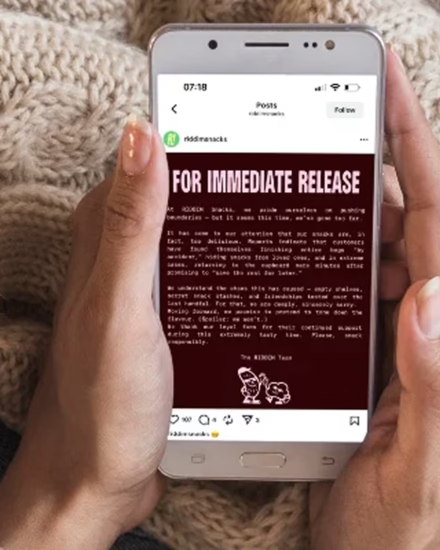
From the moment you land on their page, you’re greeted with this 👇

In the h1, in the menu (“we story” and “shout us”) and throughout the whole website, they’ve peppered their copy with patois and cultural references that are proudly Caribbean.
This is super smart, for so many reasons:
👉 It’s super distinctive, original and memorable AF (that’s the Von Restorff effect in action again)
👉 It makes the brand feel really authentic, and customers love to buy from authentic brands
👉 If you already speak or recognise the rhythm of Caribbean patois, you feel seen. You feel like “this is the brand for me”. But if you don’t, you feel like you’ve been let in on something authentic and real. It feels like you’re gaining entry to a new community by slowly learning and unpacking the language and its meaning.
That’s the genius here: RIDDIM turn patois into their brand’s shibboleth AKA a word or phrase that signifies you’re part of the in-crowd.
However, doubly-cleverly, all the way down the page, the copy switches back into plain English (“vegan-friendly,” “hand-popped popcorn,” “award-winning”) so it never feels too dense or inaccessible to people.
And then at the bottom, they wrap it all up with their mission statement: “Caribbean vibes for every snack lover.”

And boom. There it is. The reason their voice is so good is that thing we touched on with Oatly a little while ago: everything they do comes back to one big, coherent idea of who they are and what they’re all about.
Love it.
(Pssst. Not every brand is going to have a patois, but your audience will have its own lingo. And it’s super effective to sprinkle it in.)
📚 A fun bit of etymology behind the word shibboleth
If you’ve ever watched The West Wing, you’ll already know this… but the word shibboleth means any custom or tradition—usually a choice of phrasing or single word—that distinguishes one group of people from another.
And that comes from a story in the Old Testament, where two tribes have an epic battle.
After the battle, the victors set up a barrier across the River Jordan to stop the defeated army from escaping back to their territory.
However, they had a problem.
It was impossible to tell the soldiers apart just by looking at them. And obviously, the defeated army had a pretty solid reason not to tell the truth.
So the victors came up with a solution: they’d ask each person that wanted to cross the barrier to say the word shibboleth.
The defeated army, who had no ‘sh’ sound in their language, pronounced the word “sibboleth” and revealed themselves.
Language, in some form or another, has always helped separate the in-crowd from the out-crowd, and it’s no different in marketing and copywriting.
Your job is to find the words that send out the signal to your people.
#2: This thought-provoking ad from Overherd
OK, before we get into this one, we should say that we weren’t 100% sold on this bit of copy when we saw it. (And, to be honest, we’re still not completely, 100% sure now.)
But it did catch our attention and spark a 15-minute back-and-forth between us a few weeks ago, so we’re including it anyway…
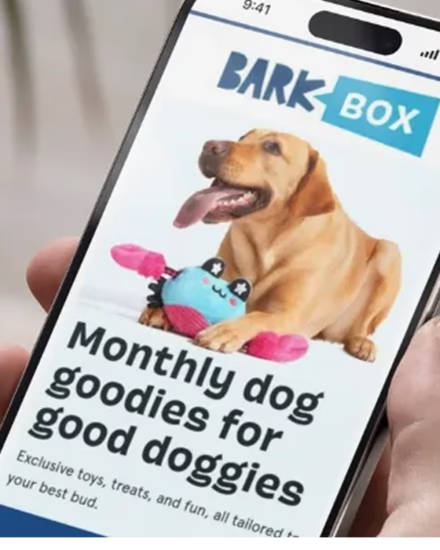
Check it out 👇

Now, there are a few things we like about this ad.
👉 It’s entirely language-led. Love that. More and more, exciting DTC and ecommerce brands are waking up to the power of their words. (See also: Surreal.)
👉 We also have a great example of that playful, almost anti-advertising, post-modern voice going on. (We won’t dig into this too much because we’re working on a long deep-dive into those post-modern, almost anti-advertising ads and when they work/when they don’t. Watch this space.)
👉 We also have a clever use of Effort Justification to make people more likely to use the discount code.
This is an idea from social psychology where if people put in a bit of effort to achieve something — even something trivial like reading small text — they tend to value the outcome more. So this eye test framing creates a micro-challenge: if you can read this, you’ve earned the code.
That flips things so the discount feels less like a marketing ploy and slightly more like something you’ve earned, which increases both memorability and the odds you’ll go and use it.
So far, all good things. Smashing it.
Exceeeept…
The copy feels very, very, very, very Oatly-coded.
Which is the thing we kept coming back to in our back-and-forth.
Is it bad form for an oat brand to straight-up rip off a competitor?
Or is it a clever example of piggyback marketing, where a challenger brand uses the existing positioning of the market leader to say “we’re just like them, but better?”
(We’ll come back to this idea in example #3, too.)
Ultimately, we landed on Option 2, with one minor caveat 👇
The very deliberate attempt to piggyback off of Oatly’s category voice makes Overherd instantly feel familiar to new customers so they can say “OK, they’re just like Oatly”.
Then it’s off the back of that similarity that they can push out their USP of oat milk powder = lighter, less waste.
That’s super clever, because they know that Oatly drinkers are eco-conscious. So piggybacking on their lingo lets them say “We’re everything you like about Oatly, but better.”
Classic challenger brand attitude. Love it.
However, the caveat comes from the fact that eating Oatly’s lunch isn’t a long-term strategy. You can’t live in someone else’s voice forever. At some point, Overherd will have to swap the Oatly voice for their own clearer brand identity.
For now though, as first moves go, hijacking the category’s biggest mouthpiece to tell your “we’re like them but better” is a pretty tasty bit of brand judo. Kudos.
👋 Put this to work for your brand:
If you’re a brand that’s just finding your feet, look at your category. Who are the big players? Whose lunch do you need to eat? Who are the brands that you ultimately need to take customers from?
Overherd clearly did their homework. They noticed that Oatly had already trained customers to expect oat-milk brands to sound witty, self-aware, and a bit meta.
So instead of fighting that, they used it as a way to make customers know, like and trust them quicker.
That’s the mindset worth stealing.
How can you use familiarity to lower friction?
Can you borrow familiar language to give you a running start because people “get” you instantly? Or use it to flip their messaging on its head? (Karma Drinks nail this.)
How will you build distinctiveness over time?
Once you’ve hooked them by borrowing an identity, how are you going to layer in your own quirks, phrases, and brand world? If you can’t, you’re just helping fund another brand’s mental availability. (This is based on Byron Sharpe’s big idea of salience and distictiveness.)
#3: This super-clever ad from Rock Face
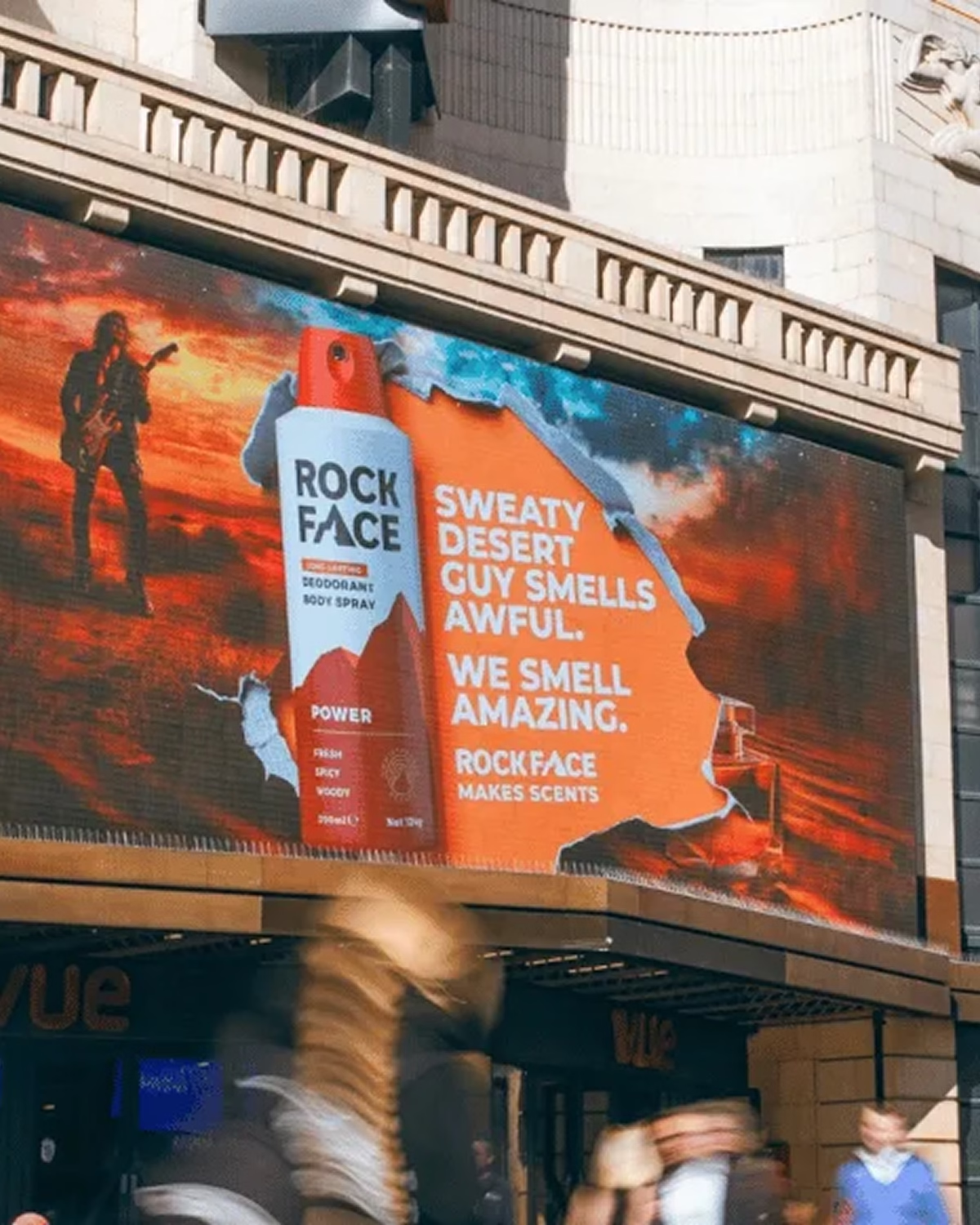
This ad came out earlier this year and has been sat in our swipe file ever since. Big, big fans of this 👇

We know we’re coming back to that idea of category judo again, but to be fair, RockFace are nailing it.
👉 Judo move #1: modern masculinity over macho BS.
The male fragrance industry is full of your classic macho BS. It’s all big cats and guitar amps and beads of sweat and perfect tailoring.
But that idea of masculinity is (thankfully) dying. And that’s where RockFace are planting their flag.
“Sweaty desert guy smells awful. We smell amazing” very clearly jabs and pokes fun at the hyperbolic, performative “man-versus-volcano” tropes to offer something more grounded and real instead: you’ll smell amazing.
Not only is that more aligned with the cultural conversation around masculinity, but it’s also a really nice bit of Jobs to be Done copywriting. (Basically, customers hire brands to do jobs for them. RockFace’s job would be to make them smell amazing.)
👉 Judo move #2: a really clever bit of competitive framing.
When we looked at Overherd, we mentioned how positioning themselves as like Oatly was a smart move to speed-run the journey to brand awareness.
And the kind of the same thing is going on here.
Except the competitive framing RockFace have chosen is to position their deodorant against fragrance/perfume, not against other direct competitors.
LOVE that.
It’s so clever, because…
👉 It makes the product feel more valuable. Instead of being an alternative to Lynx Africa or other cans of deodorant, RockFace becomes an affordable daily alternative to a £60+ bottle of fragrance. Smart.
👉 It signals quality without saying “premium” at all. If your can of deodorant can credibly stand next to fragrance, you’ve already baked in those long-lasting, complex, smells-like-a-proper-scent associations that make your product feel more premium. Double smart.
And seeing as they’ve just announced they’re launching after shave 6 months after these ads went out, that move makes even more sense.
Wicked smaht. Love it.
👋 Put this to work for your brand:
think about how customers see your product. Are you positioning your brand as one of many? Or are you making your brand seem like the obvious choice? Can you build stronger associations with your brand through the way you present your products? The way you describe them?
As we saw with Botivo and Magic Spoon a while ago, the way you choose to position your brand (or tie it to a specific moment or task or feeling) makes a huge difference to how well your messaging cuts through and how well customers respond to it.
Food for thought.
Got a bit of copy you love that you want us to break down? A brand you’d like to see us do a bit of a deep-dive into?
Hit reply and let us know.
We’re always trying to make this email the most useful thing that lands in your inbox, so if there’s anything we can write about that’s going to make you feel more empowered, more equipped or just more fired up to write awesome copy, we’d love to hear it.