Why AI copywriting always loses your brand voice and how to fix it with a belief brief
Find out why AI copy always feels a bit off and the beliefs brief that fixes it before you even start writing.

💡 This week’s big idea: if you’re briefing AI on the ins and outs of your voice and it’s still not getting it, it might be a copy philosophy problem not a voice problem.
Originally, we were going to send you an email on how to document your brand voice so AI actually sounds like you every time you write.
(No prizes for guessing next week’s email topic.)
But the truth is, we’ve found that even the most robust brand voice documents still get wobbly AI copy if you don’t do this little tweak first.
So we thought we’d dig into that bit first.
Now, we’ve been helping clients with their AI and brand voice for years. Joe started working with AI copy all the way back in 2021 when Jasper launched. (Jack was a little later to the party in 2022.)
But it was only very recently that we realised that as much as you brief it on your brand voice, there’s always something a bit wonky about the way AI thinks about how to write copy.
Rules of three everywhere. Bucket brigades for daaaaays. And an insatiable hunger to overwrite every damn thing.
(You ever notice how AI doesn’t like to let an idea breathe or leave things a little open ended? Everything has to end on a triumphant note or a neat resolution or a hero line?)
At first we thought it was just an AI style quirk, then we did some digging into how it thinks about copy under the hood.
And, while there was no study called “The Hidden Tech Bro: A Meta Analysis of Why AI Copy is so Hard Sell-Coded”, we found a few really interesting things:
👉 AI copy was trained on the internet. And the internet is disproportionately American and written in a way that Americans respond to. On top of that, Stanford researchers found that AI models align politically with California perspectives, because that’s roughly where the data and the people building these tools come from. Basically, AI thinks like an American and writes like an American.
👉 America has an entire industry built around copy as a sales tool. Courses, certifications, gurus, seminars… all teaching copy in the tradition of “every word should be pulling the reader toward a sale”.
(And we should know, because we took some in the early days. Not for us.)
It essentially boils down to: you identify a problem, you agitate it, you offer the solution, you talk features not benefits, then you close. And always be closing. And if you Google “how to write copy” right now, this is basically what you’ll find.
Copywriting in the UK is quite different. There’s more emphasis on earning attention, playing the long game of making people feel something about your brand, not always pushing for the sale…
👉 In fact, research going back to the 1980s has consistently shown that US advertising defaults to a harder sell than British advertising. It’s more informational, more direct, more pushy with less humour, less understatement and less brand-building.
👉 Finally, another AI study found that AI writing suggestions actively pull copy toward American stylistic norms. Basically, AI writing yearns to sound as American as possible, which is not ideal for UK brands. (One paper called it a form of AI colonialism, because it almost actively suppresses non-US ways of communicating.)
Now, this is where we made a bit of a leap of judgement.
All of those things pointed to a conclusion that AI pretty much defaults to that copy-as-a-sales-tool idea of what copywriting is.
Or put another way, if AI copywriting were a real person, it would wear a Patagonia gilet, love Tony Robbins and have a Wolf of Wall Street poster on the wall.
But copy is so much more than that.
There’s voice, creativity, surprise, humour, emotional, brand-building… the kinds of things this newsletter looks at week after week.
The problem is: those aspects of copywriting get completely lost unless you specifically ask for it.
(Which creates a Catch 22 situation: to get genuinely good copy out of AI, you need to know what good copy looks like and how the sausage gets made.)
TLDR: copywriting isn’t just a style. It’s a set of beliefs about how brands should talk and sell to people.
And that Wolf of Wall Street-ish idea of writing copy to “just push a bit harder and they’ll buy” feels like it’s hiding beneath the surface of a lot of AI copy we read.
And no matter how much you prompt around it, we found that if you don’t actively addressing that conflict, AI copy tends to always feel a bit off.
Almost like it’s plastered your voice on top of salesy copy, not written in your voice from the start.
So, let’s get into how to make your AI sound like it’s writing for your brand (and not writing a Cillit Bang ad).
We’re not that worried about bad AI copy. We are worried about the AI copy that feels almost right.
There’s a lot of talk right now about customers being able to spot bad AI copy and losing trust in brands that use it.
And that’s definitely a thing. A paper in the Journal of Business Research found that when consumers believe copy is AI-generated, they feel genuine moral disgust and show reduced loyalty and word of mouth.
But the thing that really got our brains whirring was when we found a survey of 2,000 UK and US consumers which found that 52% of customers report reduced engagement with a brand when they suspect copy is AI-written.
Not that surprising, right? But here’s the bit we found really interesting.
When those same respondents were shown two articles blind (one written by AI, one by a copywriter) 56% of them actually preferred the AI version.
Which suggests that AI isn’t inherently the problem.
Instead, maybe it’s something to do with our ideas around brand authenticity and consistency?
👉 Gilmore and Pine (who’ve been studying brand authenticity since the 90s) found that customers now judge whether a brand feels genuine as much as (if not more than) price, quality or availability. Customers care about whether your brand passes that authenticity sniff test.
👉 We’ve mentioned this before, but the Nielsen Norman Group found that brands with a consistent tone reduce customer decision time by 20% and boost satisfaction by 38%.
👉 A study from a few weeks ago found that 73% of customers are less likely to buy when messaging feels inconsistent across channels.
👉 On top of that, remember when we looked at the effort heuristic in Bold Bean Co’s copy? That idea that we instinctively value things more when we believe real effort went into making them? If we use perceived effort as a shortcut for quality when we can’t evaluate something directly, then does a lack of perceived effort work the other way? Maybe. In one study, 20% of people say that brands using AI copy felt lazy and untrustworthy.
Which leads us to think that maybe when a customer senses something is off about AI copy, they’re not really reacting to the AI? They’re reacting to a gut feeling that the brand isn’t what they thought it was.
Nobody really knows for certain. But it feels about right to us.
And here’s the other thing about brand consistency. It’s not really about showing up in the same tone or with the same copy everywhere.
(Remember when we looked at Oatly’s voice? Their tone changes all the time, but they’re super consistent. As they say “We’re always changing and evolving to stay the same“.)
The brands that are properly consistent are the ones where everything flows from the same POV: a clear set of beliefs about who they are and how they want to treat their customers.
Think about what actually makes your brand voice yours.
It’s not the tone words in the guidelines. It’s not “we’re chatty and conversational”. It’s the belief underneath all of that.
It’s why you use humour instead of urgency. It’s why you’d rather be remembered next time they go to buy than clicked once and forgotten. It’s why you’d never run a 10-emails-in-4-hours, FOMO campaign even if it gave you a short-term sales bump.
And those things aren’t just stylistic choices. They’re your brand’s ethics. They’re the unwritten rules your brand lives by.
All of those things make your voice, your voice.
And if AI is kinda pasting those beliefs on top of copy that is working from a different belief system, it’s not a surprise that it sometimes feels a bit wonky.
So, we spent ages trying to fix it. Better brand voice documents. Giving AI “a role to play”. And, eventually, we found something that works pretty damn consistently.
Before you brief AI on what to write, brief it on what your brand believes
When we first started trying to get AI to write better copy, we’d get really, really specific on what we wanted to see.
Clearer tone words. More examples. More “don’t say this” and “don’t use hard sell language”.
And it definitely helped. But it was still papering over what was essentially salesy AF copy dressed up in friendly language.
So instead of prompting for an end result, we started to wonder if we could get AI to think like we do before we write copy.
(The more recent AI models actually think your task through before they write. So your prompts need to pre-empt that instinct towards sales letter writing before they get started. Otherwise, it’s already decided to be salesy and you’re just editing the tone.)
And while there’s a more in-depth process you can do, you can see a pretty significant shift by just answering three questions and adding them to your prompts.
Will it be perfect? Nuh uh. But will it shake AI out of its instinct towards Gary V mode? You know it.
Here they are 👇
1. What does your brand believe about the relationship between copy and your customer?
Are you their peer or are they your audience? Are you a trusted friend or salesperson? Are you more Gandalf, the somewhat distant, all-knowing guide or Samwise, the ever-supportive friend?
Scribble down some thoughts on this and you’ll start to teach the AI to understand the relationship between your brand and your customers, rather than it defaulting to “I need to sell to them at all costs”.
2. What kind of marketing or copy things would you never do, even if it worked?
Do you hate countdown timers, fear-based framing, competitor bashing, guilt tripping, FOMO…? Why do you hate them? Why are they wrong for your brand?
Jot down your thoughts on this and you’re giving AI a practical example of what not to do and, importantly, why you don’t do it. You’re teaching it how to think about your briefs like you do from the moment it starts work.
Which is another thing that stops it from reaching for its usual grab bag of salesy techniques.
3. When your copy is at its best, what job is it doing beyond selling? And where else does your customer already experience that feeling?
Do you want to make them laugh? Make them feel seen? Make them feel smarter? And is that humour more Philomena Cunk or David Mitchell? Is feeling seen like reading a Dolly Alderton novel or seeing a “Trendy dad in his 30s starter kit” meme? Is feeling smarter like listening to a podcast or learning how to do something new?
This question is a bit of a wild card that we found through trial and error. The real trick isn’t to describe how you want to sound, but to try and capture where your customers experience the same feeling that you want them to feel when they read your copy.
Because, as we’ve talked about before, emotion-led copywriting can be huuuge for helping with things like customer loyalty, price sensitivity, message stickiness, long-term profitability…
Then, when you’re done, drop them into this 👇
Before you write anything for this brand, read these answers carefully. They tell you everything you need to know about how this brand thinks about copy.
1. The relationship between this brand and their customer: [Your answer here]
2. What this brand would never do, even if it worked: [Your answer here]
3. What their copy is doing beyond selling, and where their customer already experiences that feeling: [Your answer here]
Do not default to benefit-led, conversion-heavy copy. Do not use “not just X, it’s Y” constructions. Do not over-explain. Let the brand’s answers above guide the philosophy behind every word.
Now, [brief your copy task here.]
Dropping that prompt before you brief in your task tells AI not just how to write but why.
It makes sure it knows what your brand actually believes about the relationship between copy and the people reading it before it goes into default sales mode.
And it makes a big difference.
Check it out 👇
Putting our belief-first prompt to the test
When we were kicking around this idea, we realised we needed to be able to really, properly test it out without us being able to put our hands on the scales at all.
So we got AI to write some copy for Surreal. (Because Surreal has a very strong voice that AI is quite good at replicating.)
Then we ran the same brief (“write a headline for Surreal, a high-protein, low-sugar cereal”) through AI with no context and then through AI with that beliefs brief.
No other changes at all.
Here’s what we got pre-beliefs prompt 👇
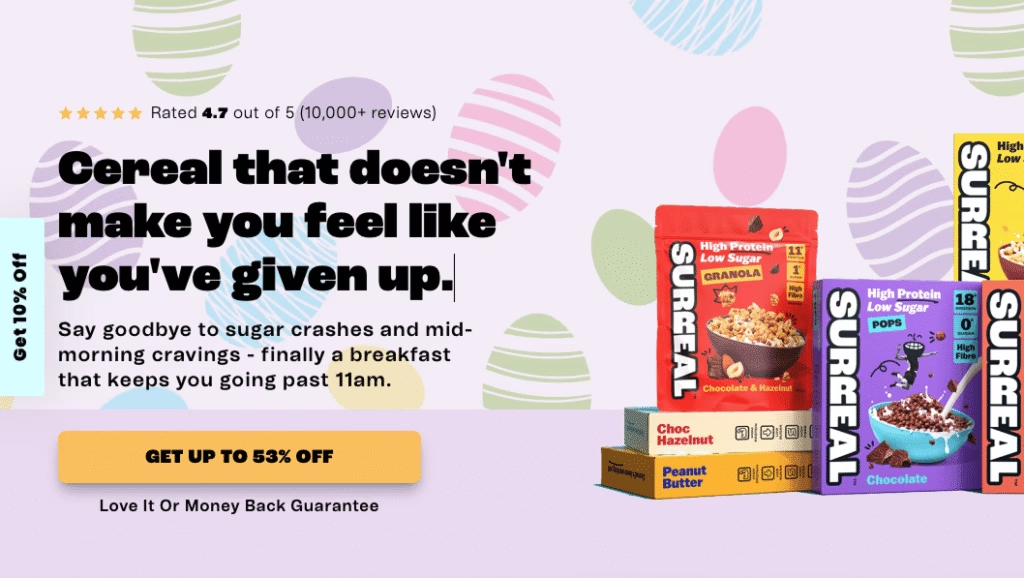
See how it’s captured that sarcastic, self-aware tone from Surreal?
Tonally, it’s pretty close. But it’s still off. It’s not right.
And that’s because it’s selling from a place of negativity. It’s agitating a pain point. It’s selling the idea of avoiding feeling bad about yourself, rather than selling feeling good about yourself.
That’s all classic sales letter stuff. No amount of brand voice can hide that.
But then we gave it our beliefs prompt. (We had an educated guess at what Surreal would say.)
/Before you write anything for this brand, read these answers carefully. They tell you everything you need to know about how this brand thinks about copy.
- The relationship between this brand and their customer: Peer to peer, 100%. Our relationship with our customers is a bit like we’re in a WhatsApp group chat with them. We feel a bit gross outright selling or talking about ourselves, so we always undercut it with a joke. We’re like that friend that’s really good at what they do, but feels a bit uncomfortable with it. So we joke a lot. We never talk down to customers. We’re almost too familiar, if anything.
- What this brand would never do, even if it worked: Honestly, we would probably do any sales technique out there, but with a self-awareness to it. So we’d say “Oh look, a countdown timer to drive sales. Bit gimmicky, but you’re still going to spin it. And we’re going to look like marketing geniuses.” We wouldn’t say “Spin for a discount on high protein cereal.”
- What their copy is doing beyond selling, and where their customer already experiences that feeling: Our best copy is trying to get a laugh, always. That’s pretty much our number one goal with any copy. Sometimes we need to highlight macros and protein for our audience, but that’s done with a wink and a smile too. Think dry humour like Ryan Reynolds. Self-aware.
Do not default to benefit-led, conversion-heavy copy. Do not use “not just X, it’s Y” constructions. Do not over-explain. Let the brand’s answers above guide the philosophy behind every word.
☝️ See how this is a bit rambly? How it feels like we’re thinking as we write? That makes a difference too.
We’ve found that really precise briefs tend to get quite, literal pattern-matched copy back. You say funny and it goes for the ha ha. But if you say “it’s kinda like Robin Williams in Mrs Doubtfire”, AI has way more context to go on and you get much better results.
And this is the headline we got from that prompt 👇
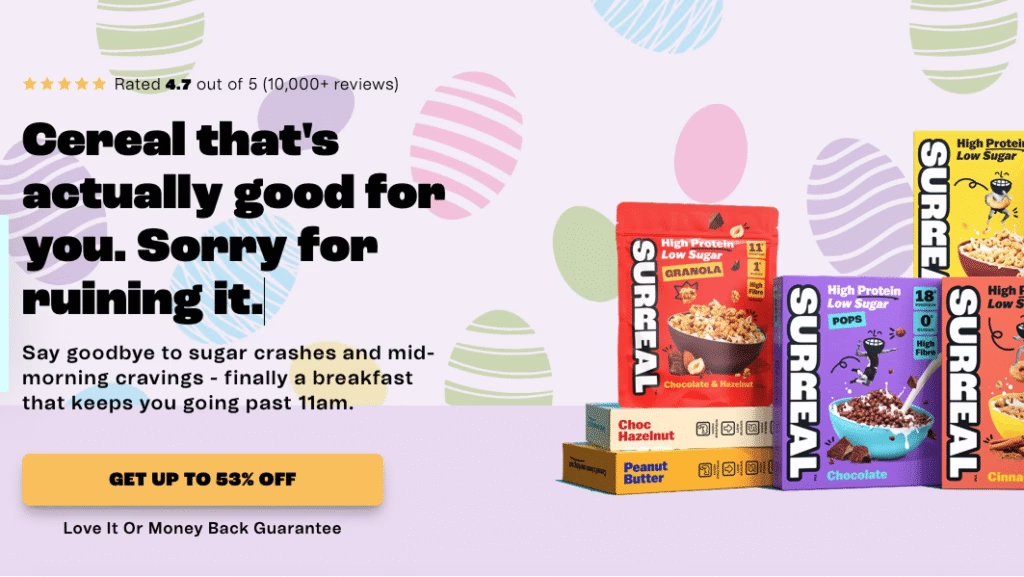
Is this headline going to win awards? Nope.
Would we let a client see it, even as a draft? Probably not.
(All of that taste and nuance stuff comes from the brand voice document, anyway.)
But what it doesn’t do is sell from a place of guilt.
It uses positive framing and gain framing, not fear or FOMO.
And it has a wink-wink joke about enjoying cereal because it’s sugary and bad for you. Not a “do
Essentially, it just knows its audience a lot better.
Sure, it needs an edit and a clearer brief.
But as a starting point, it’s philosophically aligned with what Surreal believes about copy. The other one isn’t even close.
☝️ And that’s the magic of briefing on belief as well as brand voice. After you’ve removed that roadblock, everything is easier.
At Do Words Good, we help brands find, document, and write in their brand voice — including training AI to think and write like them. If you want to chat about what that looks like for your brand, book an intro call here.