
Why we love this
 Why we love this
We've seen a lot of brand voice guidelines.
Most of them are closer to style guides than brand voice guidelines. Don't use passive voice. Use contractions. Avoid jargon. Be friendly. Be chatty.
But they don't show you what the voice feels like.
Headspace's does. And we love it for that.
Steal this for your brand
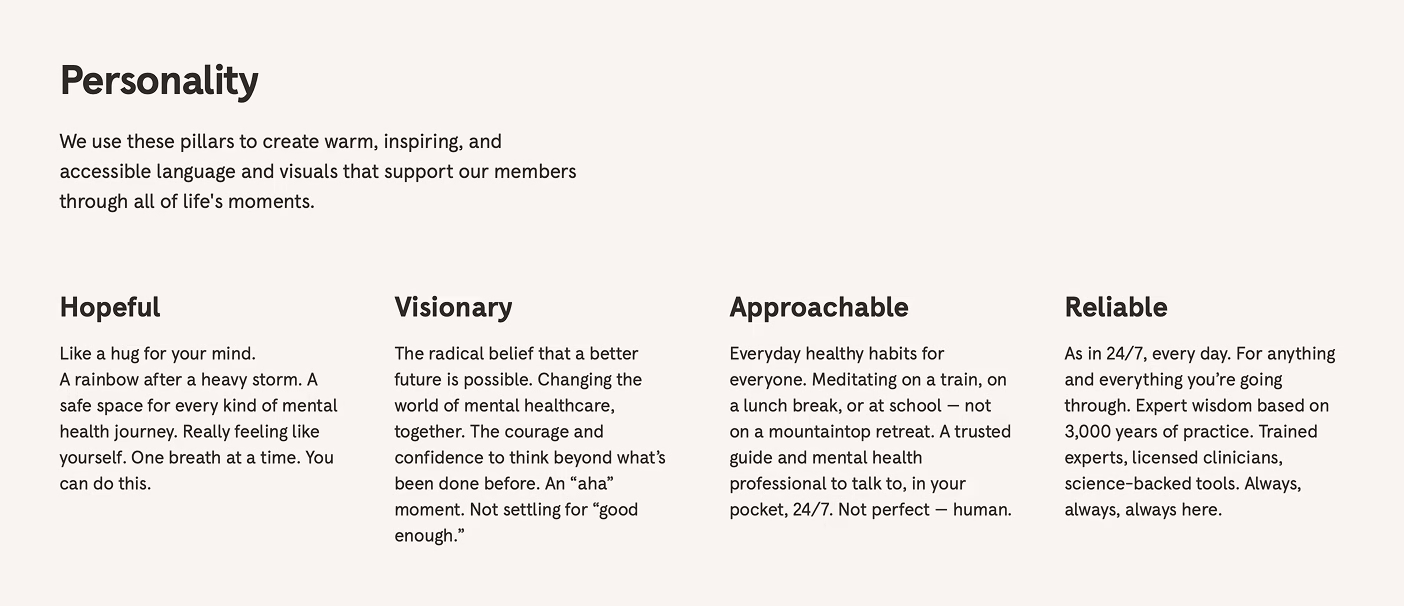
"Like a hug for your mind. A rainbow after a heavy storm."
"Meditating on a train, on a lunch break, or at school — not on a mountaintop retreat."
Those kind of details in your brand voice document are like gold dust for any copywriter because they don't tell you "use similes, metaphors and real-life scenarios", they show you how to use the voice.
Which means if you're writing for Headspace, you absorb the vibe and the tone from reading those lines far better than you could from "we're empathetic and chatty and grounded".
And it won't just make your copywriters happier if you do this.
It makes your brand voice more consistent, too.
You see, most brand guidelines rely on drilling home something called procedural knowledge. That's knowledge where there are set rules and guidelines for each situation.
Think: we use verbs here, commas there and a chatty tone in this context.
The problem is, writing copy doesn't use procedural knowledge. It uses contextual knowledge, because communication is inherently context-based.
Think of it like being able to cook a recipe vs being able to whip up a meal with whatever's in the fridge.
Sometimes, a situation is going to call for your brand voice to bend or adjust or be turned down a bit.
Collaborations with other brands. Legal documents. Crisis communications...
In those moments, the writer with procedural guidelines has two choices: stick to your brand voice that isn't right for the situation, or ditch it entirely.
Either way, you end up with something off-brand and not right.
But if your team understands the why behind your voice — if they've absorbed it rather than memorised it — they'll find ways to adapt it so it still feels like your brand.
That's when you have a super consistent brand voice.
Because when people know the why, they can adapt the how. And that's how your voice stays consistent even when it has to change.
This matters even more now that AI is in the mix.
Give AI a rules-only document and you'll get copy that sounds nothing like you. But give it examples, context, and the feeling behind the voice? That's a different story.
(It's a bit more complex than that though. As we found out when we asked AI to write in Monzo's very well documented voice.)
So here's the thing to nick today: is your tone of voice a collection of a few tone words? Or are you helping writers (and AI) learn through examples and giving them the reasons why? If it's more the former than the latter, have another look. Add some examples of your favourite bits of copy. Say "we write like this because we want customers to feel like this when they read our copy".
That's how you have a brand voice that flexes, bends and adapts without ever feeling not like you.