3 more bits of copy we loved in December (and why they work)
We’re sharing 3 bits of copy we loved this month and why they’re smart, sticky, and worth stealing for 2026 campaigns.

How’s things? Starting to feel less like you want to work and more like you want to stick on Smooth Christmas and eat a mince pie with your 10 o’clock cup of coffee?
Yeah. Us too.
We’re at that stage where we’re wrapping up (Christmas pun alert!) projects for the year, doing a bit of planning for Q1/2 and turning our morning sync calls into hour long discussions about Christmas shopping and Joe’s new puppy.
So it’s quite fitting that this week’s email is one of our swipe file-style “copy we’ve loved recently” ones rather than the usual deep dive, because, honestly, who has the brain space post-BFCM and pre-Christmas for a load of theory and consumer psych?
So, without further ado, let’s get into it.
👋 Quick recap:
If you’re new here, every month or so we send one of these emails out that’s full of bits of copy to add to your swipe file (and why we love them).
TL;DR: the two of us spend a lot of time every week reading copy, sending each other screenshots and adding things to our swipe file. (Which sounds fancy, but it’s just a Notion page full of copy that we like or find interesting or that might inspire us down the line.)
And while some of those bits of copy find their way into the full newsletter, some of them end up stuck in this weird limbo where they’re interesting enough that they deserve to be talked about, but not quite deserving of a full deep-dive on their own.
(Or they’re a variation of something we’ve written about before.)
But we realised that if we’re keeping them as inspo, then we should probably share that with you too. Because who knows what will spark your next ad idea or moment of genius?
So here are three of our favourite bits of copy we’ve seen over the last month or so (and why we’re big fans)👇
#1: This really interesting retargeting ad from Wild Dose
Remember that “we’re sorry” trend that popped up a while ago and is still everywhere? Well, this kind of post might be the thing clogging up your feed in 2026.
(More on that prediction later.)
For now, let’s check it out👇
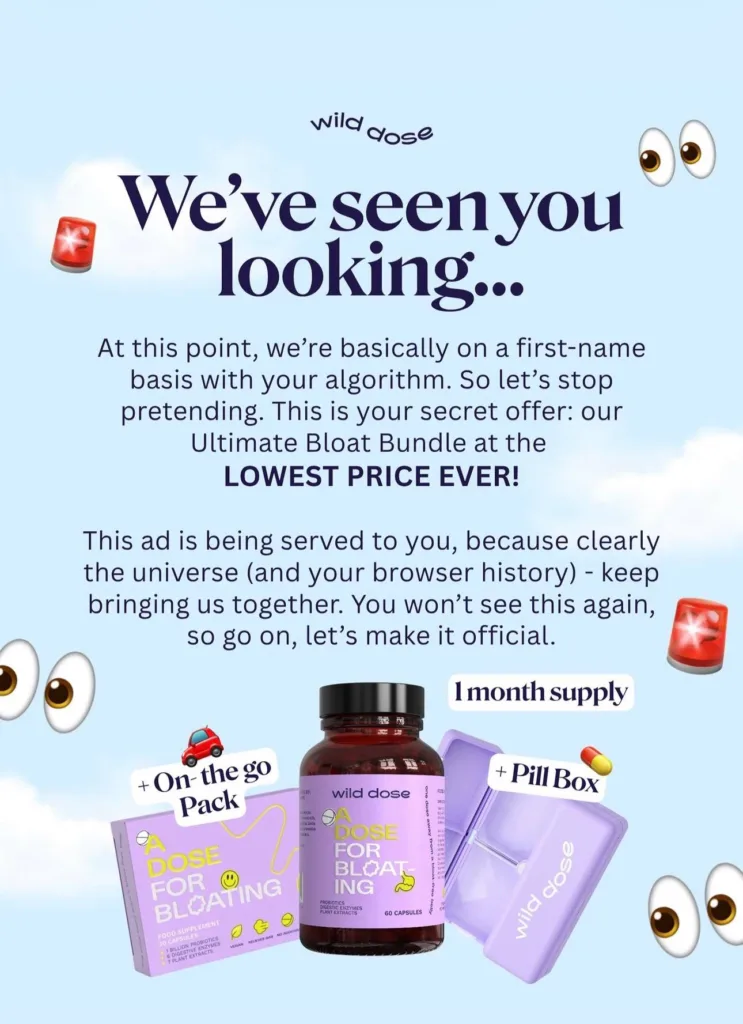
Now, what’s really clever about this ad is that it takes the standard “saw you browsing” messaging that you see in abandoned cart emails and retargeting ads and gives it a Gen-Z twist that makes it a lot more compelling.
Millennials and Gen Z know exactly how ads and marketing works. They’ve grown up with TikTok’s For You Page, “why am I seeing this?” labels and cookie banners every time they open a browser.
In other words, they’re not naive to the fact that their data is being stored, tracked and used to sell them stuff.
(In fact, the privacy paradox tells us that younger audiences care more about their privacy but will put up with a trade off if they get more personalised ads or the trade off feels worth it.)
That gives Wild Dose the creative scope to say things like:
- That they’re “on a first-name basis with your algorithm”
- That “the universe (and your browser history) keep bringing us together”
All things that, historically, brands have completely avoided saying.
Sure, it’s all bundled up in some clever rom-com-esque, meet-cute framing to add some personality and brand voice (love that), but the real power of this ad comes from the fact they’re addressing the tracking elephant in the room to…
- Defuse the creepiness. It feels way less creepy to read this ad because it’s openly joking about following the customer. That radical transparency breaks the tension, creates a bit of “we’re both in on this joke” and builds trust.
- Put them and the shopper on the same side. There’s also an element of “we both know how this game is played” to this ad which again creates a sense of closeness with the customer.
- Give them a “personalised” offer. Ending with a personalised, tempting offer diffuses the ickiness of the ad really well, ticking all of the boxes of that privacy paradox balancing act AKA “if you’re going to harvest my data, at least make it worth my while”.
- Focus only on the offer. Because they’ve established that this customer has seen the brand lots of times, they don’t need to talk about any benefits of the product at all. All their copy can just focus on that last nudge to get them to add to cart. Smart.
Then, they wrap it all up in a one-two punch of “you won’t see this again” at the end.
They could quite easily have left that out and called it a day. But adding it in not only creates a healthy cherry of FOMO on top of the personalised offer, it also acknowledges and diffuses the privacy concern of “oh no, I’m about to get hammered with this ad every time I open the app”.
It’s like the brand is saying “hey, we know this is annoying and a bit weird, so we’re only going to do this once and if you don’t want it, we won’t offer again”.
Really smart, empathetic and tuned-in stuff. Love it.
🔮 Our copywriting prediction for 2026:
If we were betting men, we’d put a bet on us all seeing a lot more of these almost post-modern, anti-marketing, self-aware bits of copy on your feed and on billboards next year.
Why? Well aside from the fact that a recent study found them to be super effective for millennial and Gen Z audiences (with a positive impact on brand perception and purchase intent), it’s also the way these things tend to go.
Marketing theorist Douglas Holt calls this the postmodern branding paradigm: as a market becomes more cluttered and saturated, brands survive by presenting themselves as “authentic cultural resources” that people can use to reflect their own identities rather than the standard top-down “let’s sell our stuff” relationship.
Rather than selling to customers, brands present themselves as a way for customers to say who they are.
(We’ve already touched on that a lot this year.)
After that initial phase of lifestyle marketing, he says, they start to lean on “ironic, reflexive brand personae” AKA ads that joke about advertising, copy that doesn’t try to sell and brands that behave more like cultural commentary than catalogues.
That’s exactly what we’ll see a lot more of next year, we reckon.
And, completely unsurprisingly, Oatly were the canary in the coal mine for this stuff with ads like this👇
(Obviously, Oatly weren’t the first to do this, but they did turn it into a mainstream move for FMCG and ecomm brands.)
#2: This IG post we absolutely loved from Greenpeace UK
If you follow us on Instagram, you’ll already have seen us wax lyrically about this post.
And while it might not have very much copy, it’s still an absolute banger.
Check it out 👇
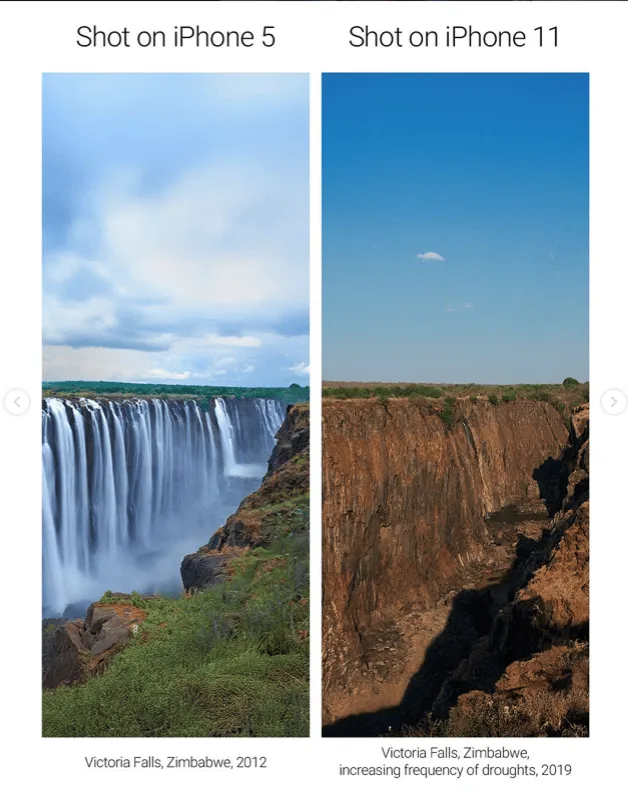
OK, so first things first: just like that Surreal ad we looked at this year, this post is built on that Generation Effect trick to get our brains to fill in the blanks and “discover” the meaning of the ad.
Love that. That makes it sticky and memorable and all that other good stuff.
But the thing we really love is the really clever use of the iPhone framing.
Sure, it’s a parody of Apple ads to grab attention, but it goes way beyond that, too.
Imagine if the post was this instead 👇
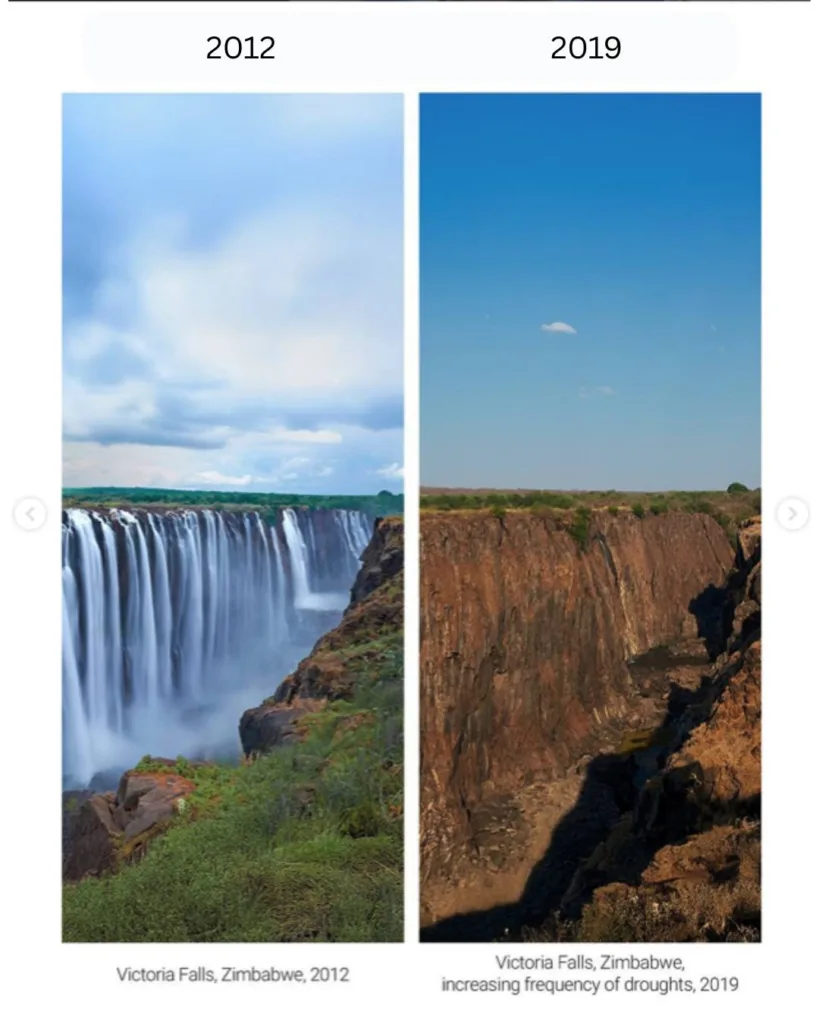
That’s the same pictures and the same timeframe.
But without the iPhone framing, it just doesn’t quite land in the same way, does it?
It’s less of a visceral gut punch and more of a slow, almost intellectual realisation.
That’s because things like dates and time live in the “facts” bit of our brain (AKA, our semantic memory). We know them to be true, but we don’t feel them or engage with them on an emotional level.
Things like iPhones we’ve had, on the other hand, live in our autobiographical (AKA episodic) memory.
That’s what makes this post so smart. Instead of an intangible, intellectualised idea of a 7-year timespan, it makes our brains think “oh wow, I had an iPhone 5 at uni/when I got engaged etc… and that wasn’t that long ago. The climate emergency is happening fast. I should do something about it.”
And that “aha!” realisation drives the point of the post home a lot harder and on more of a gut level than stats and science ever could.
☝️ That’s backed up by studies, too.
Studies into climate communications have repeatedly found that framing the climate crisis through episodic memory and as something personal and self-referential instead of scientific (so something like “your house could be underwater before your great grandkids are born” vs “sea levels expected to rise 1m by 2100”) is more likely to create behavioural change than just talking facts and stats.
Again, wicked smaht.
#3: This 🔥 campaign by Patagonia
When we were planning this email, we were going to choose another campaign to show off here as it’s kinda similar to the Greenpeace one.
But it’s simply too good to ignore.
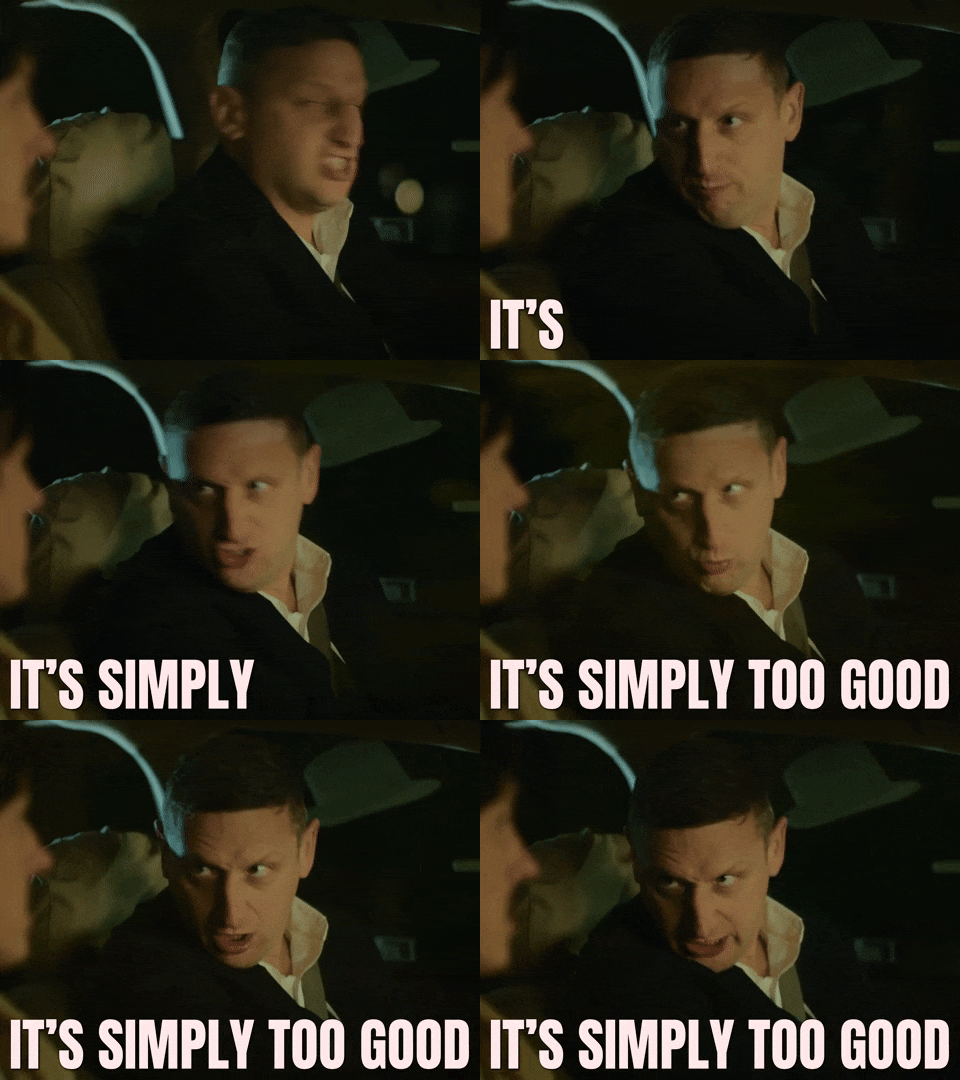
(Plus, it also combines some of the same strategic elements as the Wild Dose ad, so it feels like a really neat ending.)
As we’ve discussed before, Patagonia loves using the consumerism of Black Friday to draw attention to their mission. (We’ve talked about that famous “Don’t buy this jacket” ad this year.)
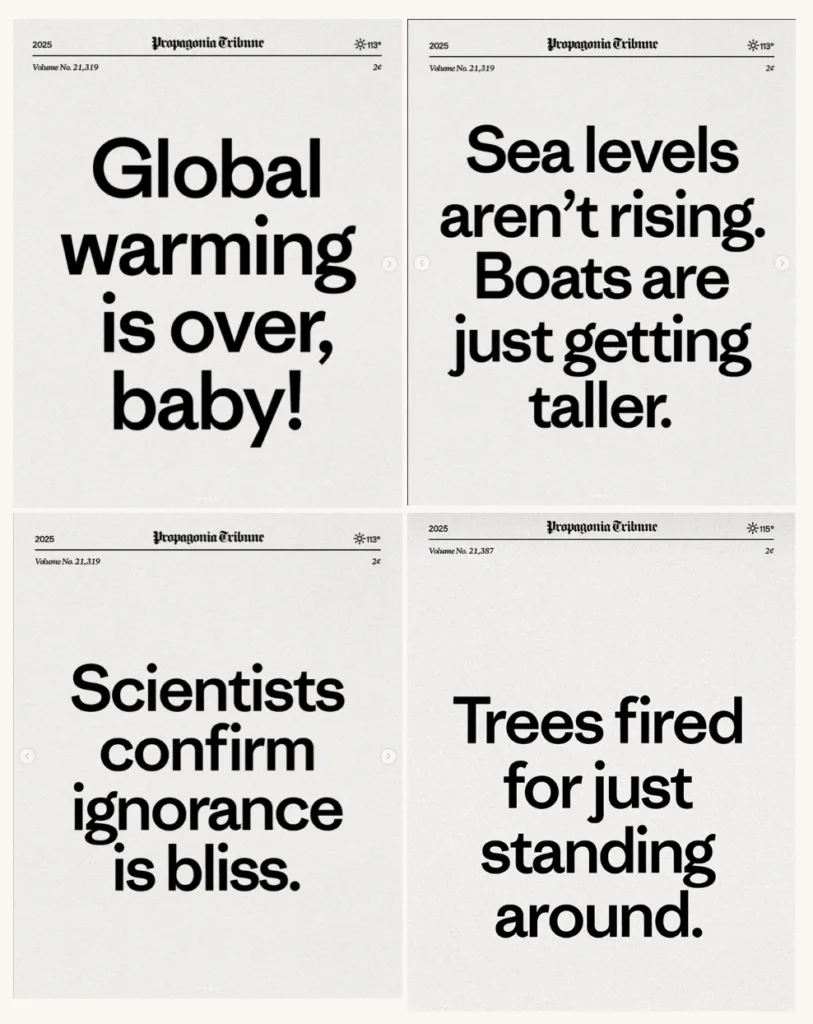
And this Black Friday was no different, with these bangers going live on social media. Check them out 👇
(Side note: we’re loving how many brands are going all-in on copy-led campaigns recently.)
This campaign is so good.
First of all, this campaign is another example of that thing we talked about with Wild Dose where they’re letting the audience in on the joke and creating an in-group of “us and them”.
Plus, all the copy in these ads further cements that in-group, “brand as authentic cultural resource” changing of the wind towards post-modern branding too.
Second of all, we 💛 a mission-led, vocal, in-your-face, outspoken brand.
But the thing we most love about this campaign is that it’s a really clever play on a concept called reductio ad absurdum that they’re using to push back against anti-climate crisis arguments and speak to their core audience.
TLDR: reductio ad absurdum is an Ancient Greek debate technique where you disprove an idea by following it all the way to its logical end point and demonstrating that it’s ridiculous or contradictory. Basically, if the conclusion is false, the premise must be false too.
A classic example from Ancient Greece: If the Earth was flat, it would have finite edges and we would have people falling off of the edges. Therefore, the Earth cannot be flat.
That’s what’s happening with these headlines.
They’re using this clever technique to show the logical conclusion of climate denial ideas and point out how absurd it is for organizations, businesses and brands to be acting that way or burying their heads, especially on Black Friday.
And through that silliness and absurdity, it draws a line under Patagonia’s core brand position of “we’re not like that, we’re taking this seriously. And if you wear Patagonia, that’s what you believe too.”
Oh, and that Propagonia logo? Cherry on top.🤌
It’s all just so, so good.
👋 Side note: we should add here that Patagonia probably didn’t brief this campaign in as “let’s play around with classic Greek rhetorical techniques to draw attention to the ridiculousness of climate denial”.
The copywriters might not even have been aware of just how clever the copy was when they were writing it.
In our own work, we’ve found that the more theories, stories, weird references and interesting ideas we feed our brains every week, the more they sneak into the copy without us noticing.
And when you actually sit down to write, those influences and ideas leak out of your brain in useful ways without you having to force them or even realising where they came from.
That’s why we love writing these breakdowns and swipe-file emails.
Every little technique we notice or idea that you can be like “oh yeah, that’s clever!” becomes another tool or trick your brain can reach for later. Even if, in the moment, you’re just “writing what feels right”.