Verbal identity development & documentation for challenger brands
Your brand probably has in-depth guidelines for how it looks. This is the same thing,
just for how you sound.
You know that feeling when you read copy and just know which brand wrote it? Monzo have it. Patagonia have it. Oatly, innocent, Surreal all have it too. That's what we help you build. A language system so specific to your brand that every word — whether written by people or robots — feels like only you could have said it.








Your brand looks the same, wherever it shows up.
Let's get your words
doing the same thing.
Starting at £7,000
Your brand guidelines tell any designer exactly how to use your logo, your colours, your typefaces… so your brand is always super consistent. But for copy, most brands have a page of tone words and a few examples.
And that tone of voice is a great starting place. But growing brands need a voice system.
A verbal identity is like a tone of voice document on steroids. It's the rhythm of your sentences. It's your positioning. It's your messaging. It's the kind of jokes you make. It's the things you'd never say in a million years. It's the tiny phrases and quirks that only your brand does.
Basically, it's every nuance, quirk and attribute of your voice documented, with real examples, so anyone who writes for your brand — new hire, agency, freelancer, robot — sounds like they've been writing for you for years.
(Plus, we'll do an AI-friendly version too. Because when you give AI a verbal identity, it can actually write like you.)
So what does a verbal identity
actually look like?
Verbal identity strategy
This is where we figure out what your brand sounds like and why. We dig into your positioning, your messaging, your relationship with your customer, where you stand out and where you might be blending in. Basically, we take the same level of thinking that went into your visual identity and apply it to how you sound.
Verbal identity guidelines
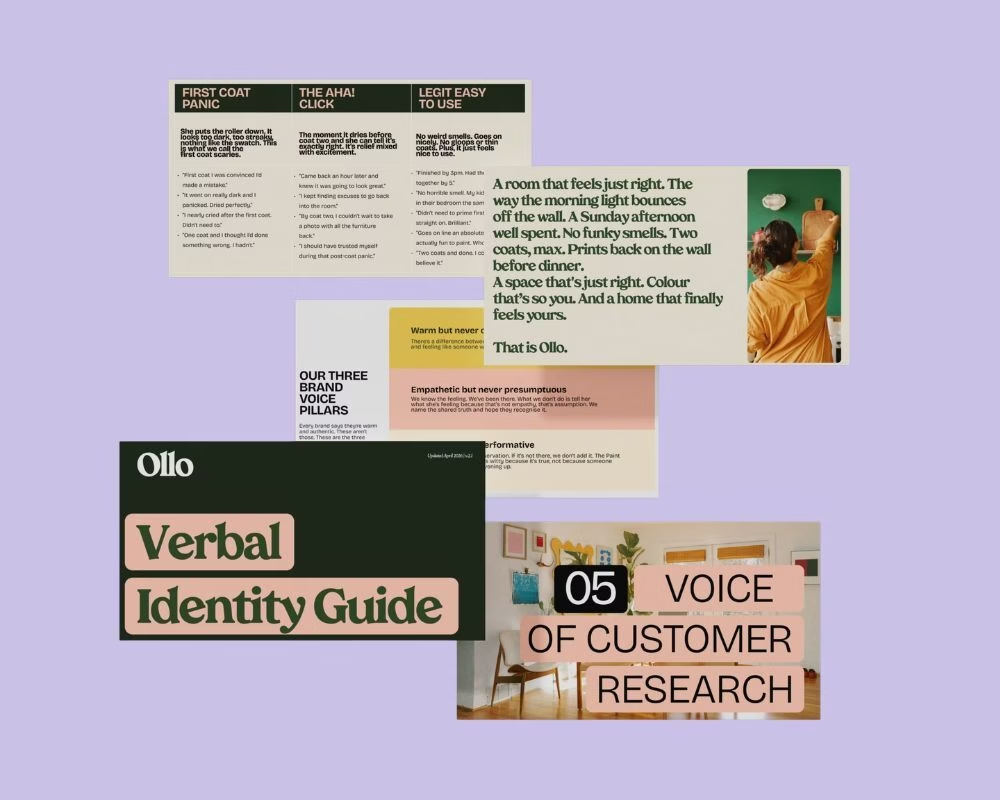
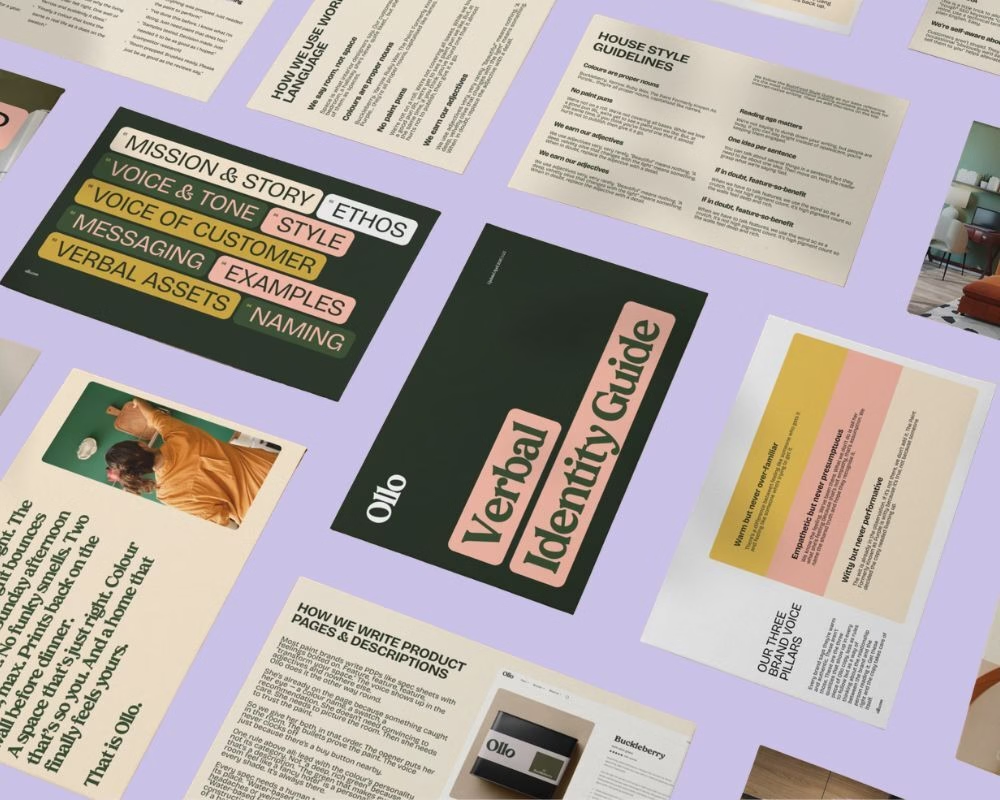
Think of this as your brand's language bible. Mission, story, voice, tone, messaging, verbal assets, style, examples — basically every strategic and stylistic decision about how you communicate, documented and shown in action. So whether it's a new copywriter, an agency, or AI writing your copy, they all sound like you.
Benchmark copy
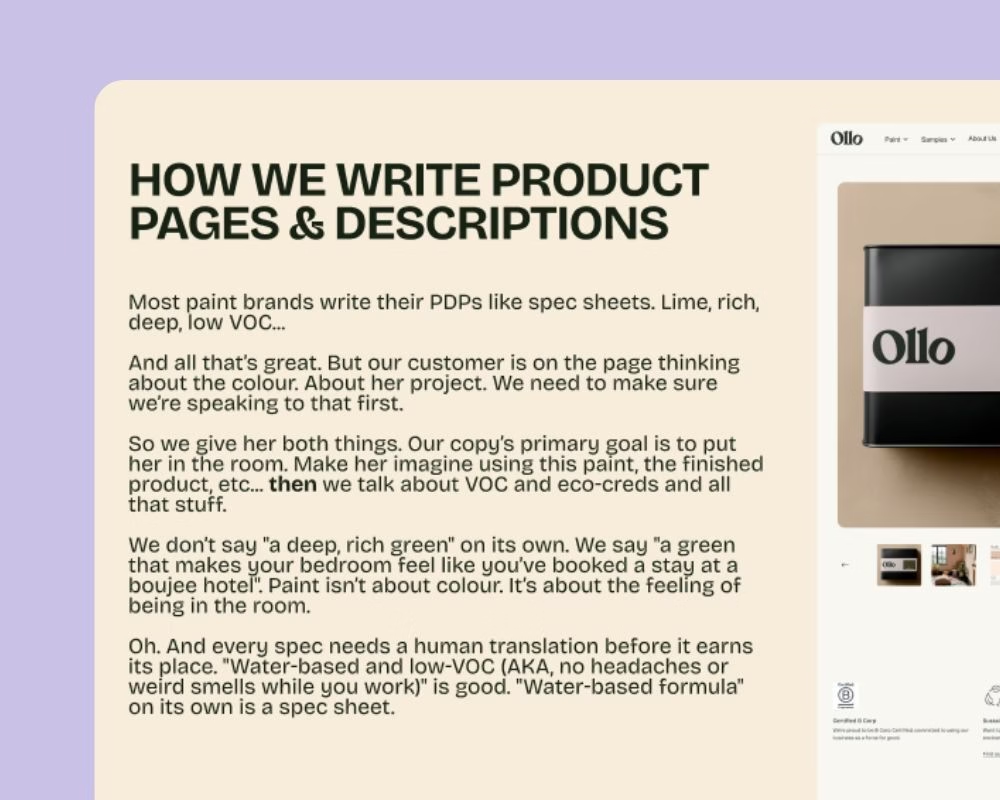
Guidelines are great for locking down the rules. But people and AI learn better from seeing things in action. We take your best copy and annotate it: what's working, what techniques it uses, what the off-brand version looks like and why. So everyone can really nail the nuances of your voice, not just get it in the right ballpark.
Brand voice copybot
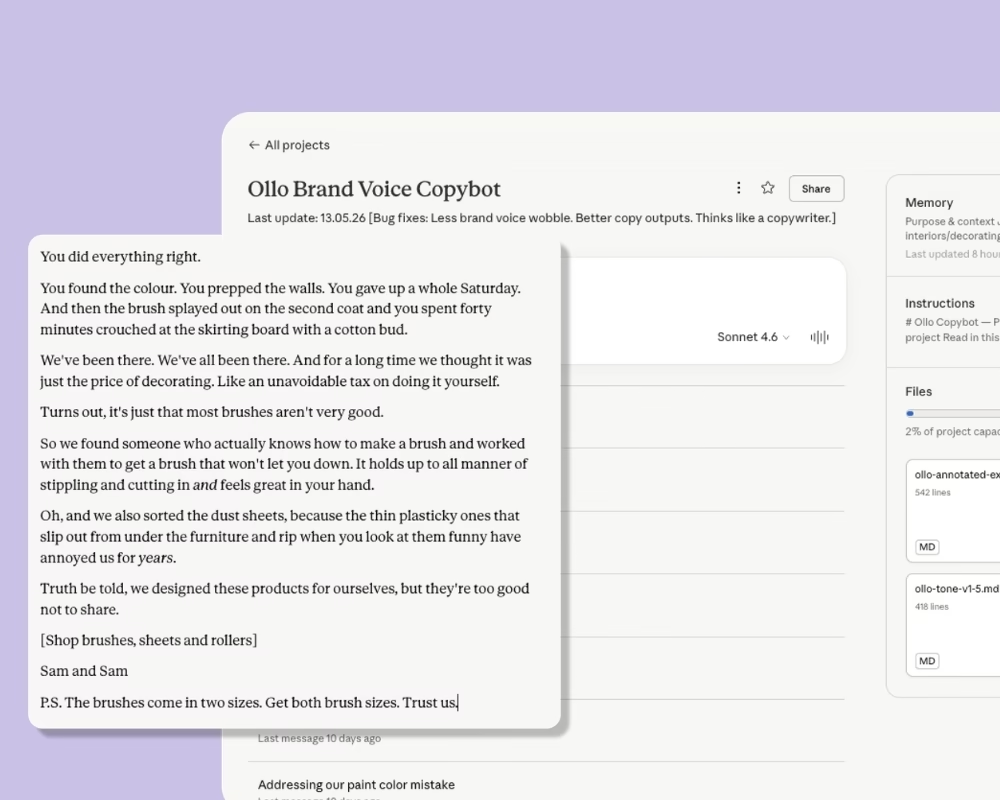
Most copybots are glorified vending machines. Yours will think like a copywriter obsessed with your brand. We train it on everything (the strategy, the guidelines, the benchmark copy) so it understands not just how you write, but why. It lives in Claude, ChatGPT or whatever you're already using. No new tools, no new logins.
years
Not to brag, but we've been using AI as part of our process since Jasper launched in 2021.
voices
We've helped over 50 brands figure out, dial in and then document their brand voice over the last 10 years or so.
sessions
We've run 100+ workshops on messaging and voice for everyone from pinch us now brands to scrappy scale-ups.
brands
Have used our brand voice principles or resources to develop their own shit hot voices.
Thinking about building your verbal identity? Let's talk.
Tell us about your brand, where you're at, and what feels off. Drop us a message and we'll get back within 24 working hours.
We know that most people haven't seen a full verbal identity doc before (hello iron-clad NDAs) so we've put together a full verbal identity document to show you everything that's involved. And then we'll show you how it gets AI to actually sound like you, too.
Prefer email? Hit us up at hello@dowordsgood.com.
Trusted by brands like...

Got it — we'll be in touch.
We'll have a read and come back to you with some thoughts. Usually within a day or two.
"An absolute game-changer…
transformational for us as a brand."
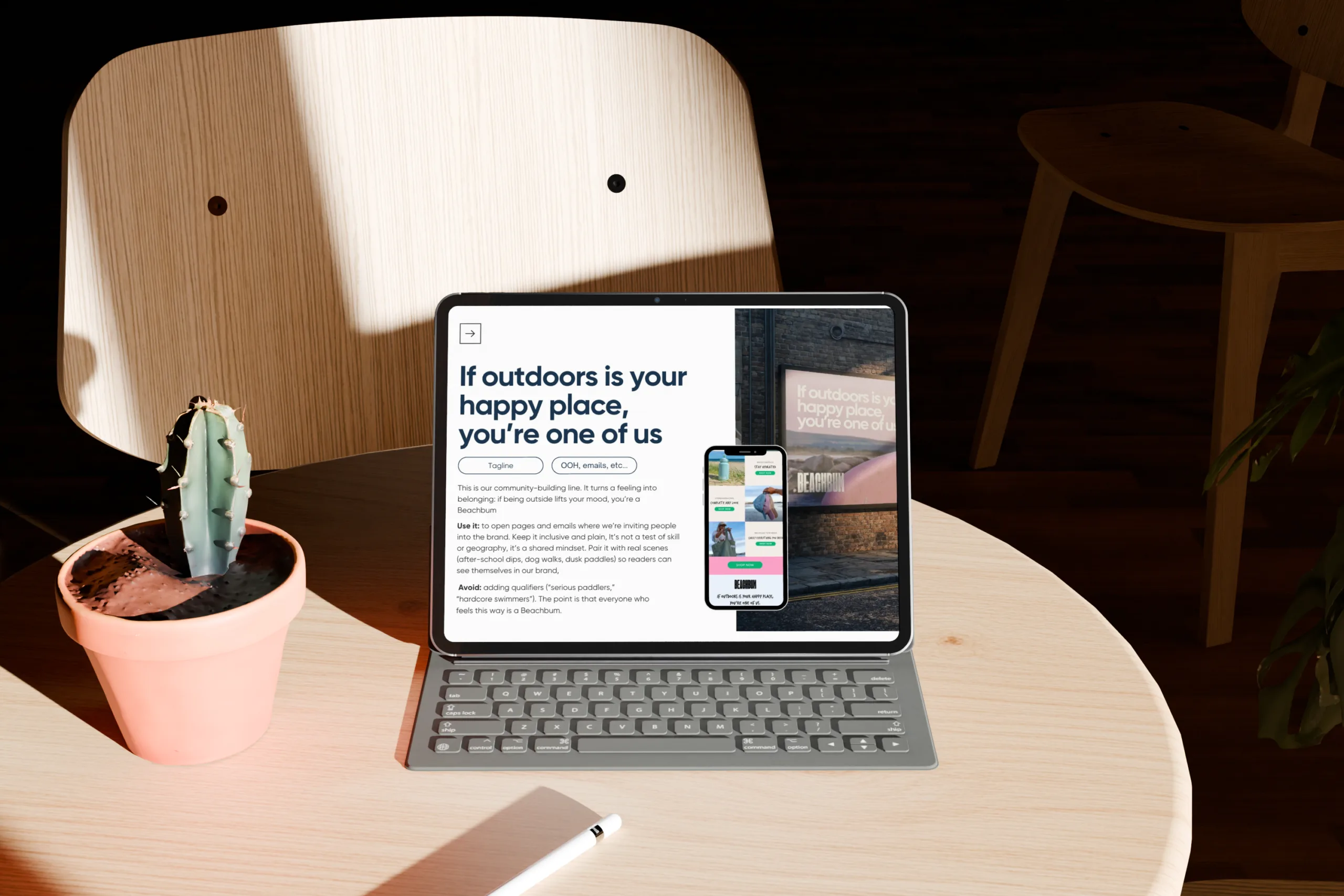
"Working with Jack and Joe has been an absolute game-changer for us. Not only are our sales way up, but they really helped us nail who we are as a brand, how we should sound (to customers and in retail decks) and gave us a brand voice & messaging playbook that our whole team have used to make everything we do unified and on-brand.
The whole thing was hugely transformational for us as a brand. Highly recommend."
MAX REYNOLDS FOUNDER, BEACHBUM
Get to know the people who'll be obsessing over your verbal identity.
We're the people sending each other copy screenshots at 11pm. Who have entire Slack threads dedicated to stuff to add to our swipe file. Joe even texted Jack some copy he saw at 2am from a Glastonbury field.
So when we build your verbal identity, we're not just documenting rules and formulas. We're teaching it the instincts we've spent a decade developing — which is basically the difference between copy that's fine and copy that makes you say "oh shit, that's good."
(In fact, we even inject our brand copywriter skill into your AI. Which is a skill we spent weeks teaching AI to think like we do about copy and how to approach copywriting.)
JACK
BARCLAY
Older brother. Obsessed with brand voice. Has genuinely rewritten a headline 103 times before we sent it over.
When I'm not at my desk: pretending I'm Carmy from The Bear, hunting for wild mushrooms with the kids, or working on the home renovation with an AF brewski in hand.

JOE
KARAALI-BARCLAY
Younger brother. Former solo marketer for an ecomm brand. Feels like the walls are closing in if he doesn't have a process and a system.
When I'm not at my desk: updating my Strava, puppy training, trekking out to craft breweries, or rewatching Mad Men under the banner of "professional development".

What the FAQ?
What's the difference between a verbal identity and a tone of voice document?
A tone of voice document tells you how to write. A verbal identity gives you everything you need to actually do it — the strategy behind your voice, the rules, the examples, the things you'd never say, how your tone shifts depending on who you're talking to. It's the difference between a mood board and a design system.
How long does it take?
A focused verbal identity build typically takes 6–10 weeks. Enterprise projects with multiple sub-brands or product lines take longer. We'll give you a clear timeline before we start.
Do we need to have an existing brand voice for this to work?
No. Some clients come to us with a clear sense of their voice that just needs documenting properly. Others need to develop it from scratch. Both are fine — we'll figure out where you are on the call.
What do we actually walk away with?
Four things: a verbal identity strategy, a full guidelines document, a set of annotated benchmark copy, and a brand voice copybot set up in whatever AI tool you're already using.
Who do you need from our side?
Ideally whoever knows the brand best — a founder, a brand or marketing lead, or both. We don't need a big committee. We just need the people who care most about getting it right.
Can you work with our existing guidelines?
Yes. If you've already got brand guidelines, a tone of voice doc, or existing copy we can learn from, we'll use them as a starting point rather than ignoring them.
How does the copybot actually work?
We build and train it using everything in your verbal identity — the strategy, the guidelines, the benchmark copy. It lives in Claude, ChatGPT or whatever you're already using. No new tools, no new logins.
Will it go out of date?
A verbal identity should evolve with your brand, not sit in a drawer. We build ours to be living documents, and we offer quarterly check-ins to keep your copybot current as your brand grows.
What if our brand has multiple audiences or channels?
Good verbal identities account for this. We document how your voice adapts — a DM to a loyal customer feels different to a press release — without losing its core character.
How is Do Words Good different from a branding agency?
Most branding agencies treat words as the last thing. We treat them as the whole thing. We're not designing your logo and bolting on some tone words at the end. Language is all we do — and we've been doing it for a decade. See some of our work.
Take the free 7-day
brand voice &
AI copywriting course.