If there’s one thing that’s become a bit of a theme in client conversations recently, it’s this: more and more brands are feeling the squeeze.
Remember that glorious period in the mid-2010s when customers were actively seeking out new brands to try? That seems like an eternity ago now.
Cost of living crisis, Covid, Brexit, bumpy global economies… it’s all added up to make customers spend a lot more carefully and generally be a lot harder to win over than they used to be.
And that’s shifted the way brands are thinking about copy.
A few years ago, we’d get on calls and everyone would want to be the go-to brand for their people. It was about voice and authenticity first and foremost.
Now, it’s flipped. Now, it’s about making their messaging broader and reaching as many customers as possible without losing that sense of who they are.
(Just last week we had three conversations with three different brands about this very thing.)
So this month, we thought we’d look at three swipe file entries where brands are using their messaging to appeal to more customers without losing the thing that made customers love them in the first place.
Let’s get into it.
👋 3 more bits of copy for your swipe file (and why they’re so good)
If you’re new here, every month or so we send one of these emails out that’s full of bits of copy to add to your swipe file (and why we love them).
That’s because the two of us spend a lot of time every week reading copy, sending each other screenshots and adding things to our swipe file.
And because as much as we’d like to pretend otherwise, we know you’re not constantly refreshing that swipe file feed waiting for new entries.
So we thought we’d break a few down in your inbox as well.
Before we dive in, a quick bit of theory.
(We know we don’t usually do this, but they’re all thematically linked to this one big idea this week and it’s useful. Promise.)
Byron Sharp and Andrew Ehrenberg (who regular readers will recognise as the people we mention all the time) found that most brands don’t grow by strengthening their relationship with existing customers but by focusing on reaching more people and making their brand mentally available in different buying situations.
Now, we should flag that this isn’t a universal rule.
The original research was based on big brands in mature, high-frequency categories like grocery, retail and FMCG.
And it also doesn’t mean that you can skip the “find your people” stage and go straight to big, broad messaging either. (That’s how you end up with wishy-washy brands. Wouldn’t it be nice though?)
Aaaand there’s some nuance to how it applies to subscription businesses. (Mental availability helps get subscribers in the door but being the brand for your people is the move after they’re subscribed.)
But even so, the theory still holds a lot of water.
In fact, research in 2024 studied more than 12,000 UK households and found that light buyers — AKA people who buy from your brand once or twice a year — make up 70-80% of any brand’s customer base, and that real growth potential comes from them rather than heavy buyers.
In other words: if 70-80% of your customers only buy you once or twice a year, getting more of them to think of you at the right moment will do more for your bottom line than getting your super-fans to buy more.
And that’s what all the brands we’re looking at today are doing.
#1: How Dash broadened their message to grow
We’ll say this right off the bat: we kinda miss the old Dash voice that was all about wonky fruit.
(They even called their offices Wonky HQ. Massive fans of that commitment to the voice.)
But this bit of copy is a really good example of what happens when a brand starts to outgrow its original message and needs to go broader to find new customers.
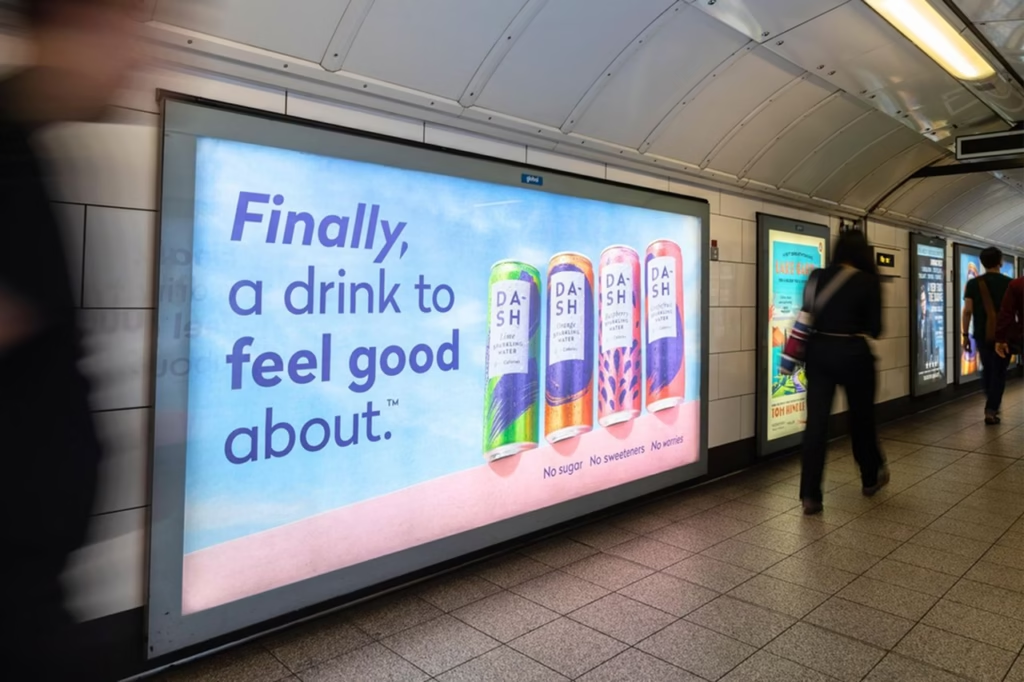
A bit of context: when they launched, Dash’s messaging was all talk of wonky fruit and food waste, all wrapped up in a slightly scruffy underdog energy.
It was really good stuff. It made their USP sticky. It turned early customers into proper advocates. And it was very mission-first to win over those early adopters.
And that’s exactly what early messaging should do.
But at a certain point, the thing that makes your OG customers love you becomes the thing that also makes strangers kinda ignore you.
In Dash’s case, that the wonky messaging only really makes an impact if you already cared about food waste.
But “Finally a drink to feel good about” works for pretty much everyone.
(And the wonky stuff isn’t gone. It’s still on the can, on the website, in their story. It’s just become a retention message rather than an acquisition one. It’s like we said in the theory section: go broad to get people in, go brand to get people to stay.)
Now, is this headline and campaign the most inventive bit of copy in the world? Not at all.
Could it work much harder? Oh yeah, for sure.
But what it does do is speak to people who want a healthy drink they can grab with their meal deal. And that creates a much bigger pool of potential customers than food waste messaging could.
In other words, it’s appealing to those light buyers, not their super-fans.
And the proof is in the pudding, because they sold 4.9 million cans in July 2025 after this new messaging went live and got a 74% year-on-year uplift.
(So we doubt the team at Dash are losing sleep over the fact we think the headline could maybe be a little more on-brand.)
Really, this bit of copy is a good reminder that great messaging isn’t really about sentences and words at all, but about thinking and strategy put into words.
Pinch this for your brand: if your messaging is getting less traction than it used to, look at whether you might be hitting the ceiling of your OG audience.
Is there a bigger, broader version of your brand story you can tell?
Dash’s wonky messaging was great, but under the hood it was always about feeling good about drinking Dash. That is the message that speaks to both their super-fans and their wider audience without losing who they are.
And when we helped Beachbum last year, we did the same thing.
Their messaging was about paddleboarding and going to the beach. We kept that core of the brand, but made it broader so that their messaging was about a love of getting outdoors to bring in people on the school run, dog walkers, families, hikers… without losing that brand DNA.
Is there a version of your message that’s bigger, broader and going to appeal to more people without losing who you are?
#2: Candy Kitten’s different approach to the same problem
Just like Dash, Candy Kittens hit the ceiling of their OG audience a few years ago.
Because once you’re the go-to sweet for vegans, where do you go? How do you grow? How do you reach the much bigger audience of people who just want some nice sweets and don’t particularly care about your mission?
(Or don’t care enough to change their behaviour?)
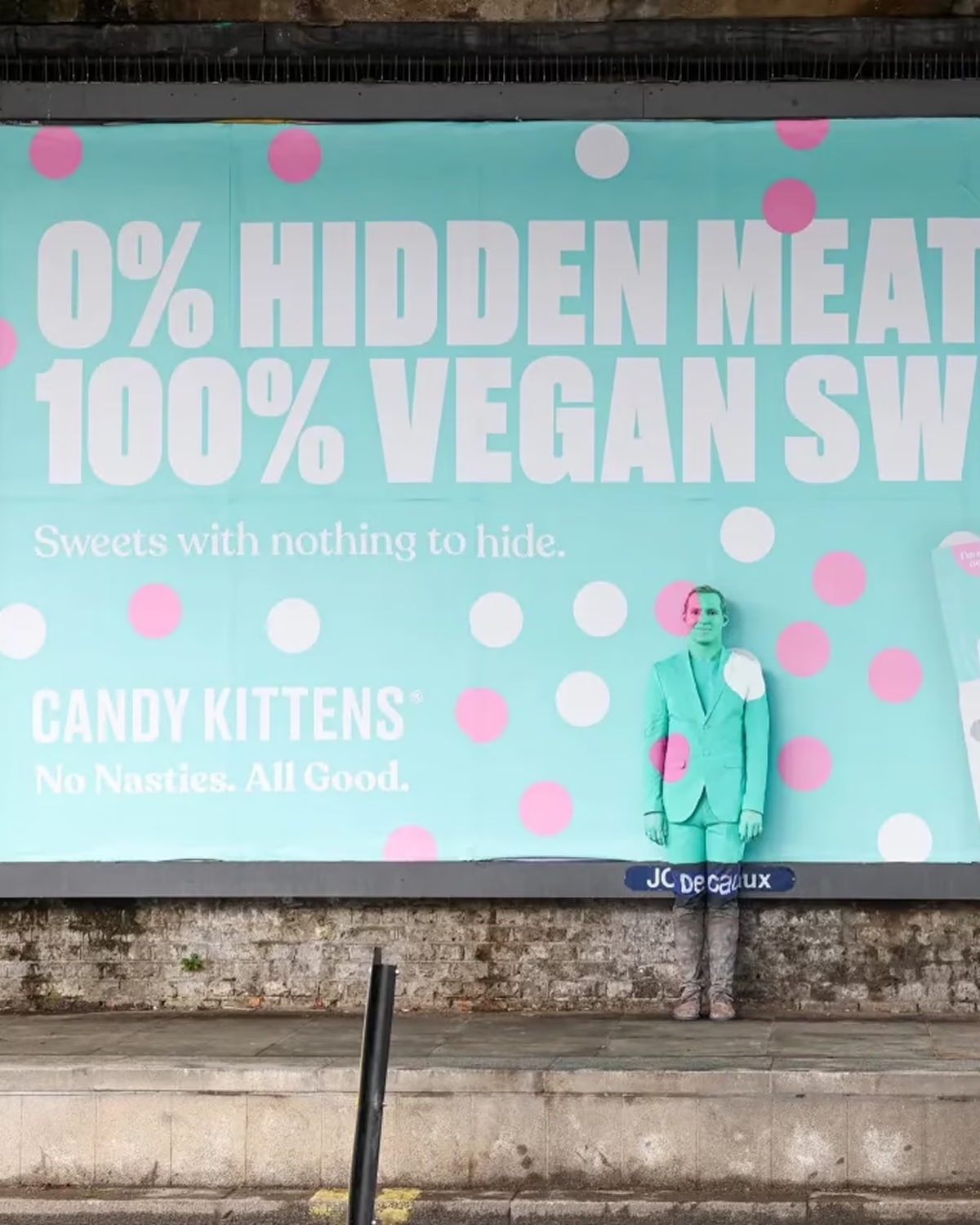
You do something like this 👇
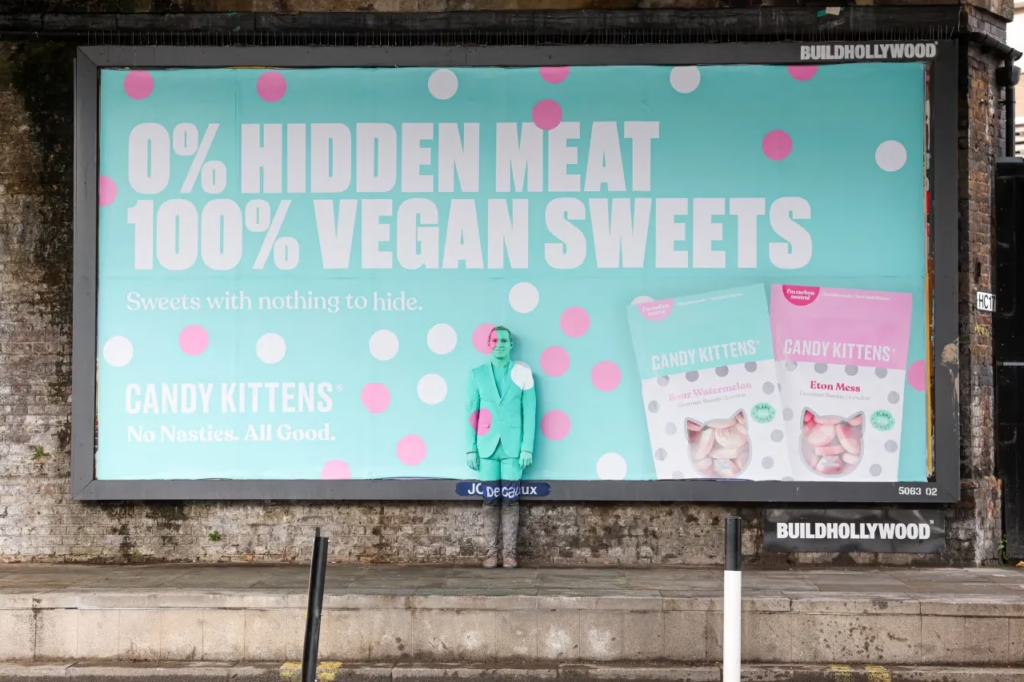
Smart.
What we love the most about this is that it was all built off the back of research that found 67% of consumers didn’t know their favourite sweets contained animal products.
Or, as co-founder Jamie Laing said: “Most of the sweets industry is full of gelatine. It’s hidden within sweets masked behind bright colours and playful cartoons and vague on-pack ingredients.”
And that insight turned into the phrase hidden meat.
Big fans of that. It’s doing a lot of heavy lifting in just two words.
👉 It’s immediate and sticky in a way that an ethical argument against eating meat just isn’t. (Because the thought of biting into meat is visceral and tangible.)
👉 It hints at nefarious practices and suggest that other brands are sneaking meat into their food (AKA, priming the customer to think of switching their sweet brand of choice)
👉 It forces us to reframe how we think about sweets. Cognitive dissonance theory tells us that we don’t change our minds by reading facts and figures, we change our minds when we encounter a thorny contradiction we can’t ignore.
In other words, “cruelty-free sweets” is meh, whatever. The thought of biting into a pork Haribo can’t be ignored. It creates that dissonance that makes us change our minds.
(This is double clever too, we’re more likely to tell our friends about brands that teach us something or open our eyes to things. So they’ve got another mechanism helping to build mental availability.)
It’s pretty much a textbook example of a brand taking their messaging and making it broader for a bigger audience.
They haven’t shifted their values or changed who they are as a brand. They’ve just found a way to make those values speak to people outside of their core audience.
Smart. Really smart.
Pinch this for your brand: this is a great alternative to the Dash approach of going really broad with your messaging.
Instead, Candy Kittens took their core message and made it operate on a gut-level rather than a brain-level.
So is there a way to do the same with your message?
Is there something your wider audience doesn’t know about your category that would make them see it completely differently? (Think an industry secret, a hidden trade-off or a fact that makes people go wait, really?)
If that doesn’t shake anything loose, think of it like this: what’s the one-sentence version of your message that everyone will immediately get, even if it’s not as nuanced as everything else you say?
#3: Nice Wine’s really clever mission statement
The Dash and Candy Kittens examples were both brands that had outgrown their original audience. This one’s a bit different.
Nice launched as wine for being on the go, at festivals, on the train…
But as co-founder Jeremy May said, they realised early on that “it’s not just the ‘on the go’ occasion that needed better options.”
They wanted Nice to be the go-to brand for more than just one occasion.
And, before they rebranded, they had this banging bit of copy on their website that did exactly that.
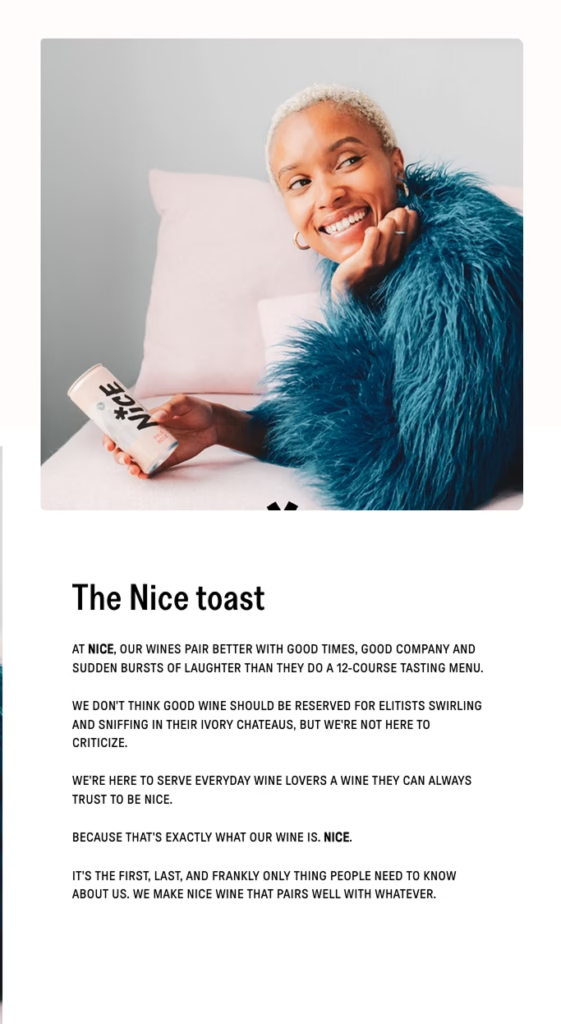
Now, ordinarily, this is not the kind of copy we’d include in the newsletter at all.
It’s very we, we, we-heavy.
And yet… it still works.
And, more importantly, it ties their product to a buying moment, not a category.
In other words, it all comes back to the idea that it’s the occasion that people are buying your product for that makes a bigger impact on what they buy than things like their identity, etc…
That means that the drink, snack or treat-y thing we buy for a Tuesday night on the sofa is completely different to the one we’ll buy for a Friday night with friends or a Sunday lunch with family.
Yet we’re still the same person. We still believe the same things. We still have the same values and the same income and the same location and the same all that other stuff that goes into avatars.
On the surface, we’re the exact customer.
But the moment we’re buying for changes how we make decisions.
And that means that your competition shifts too.
The drink you’re competing against for a Tuesday on the sofa might be other wines, but the drinks you’re competing against for a BBQ with friends might be an AF beer or a cocktail or even just a fancy sparkling water.
And that’s the really clever thing about this bit of copy.
👉 They tie it to a feeling and an emotion of “good times, good company and sudden bursts of laughter” rather than writing about notes and terroir. They’re reinforcing that link between a broad occasion, a key emotion and their product.
👉 They say “everyday wine lovers” to prime the idea that this is as much a wine for a night on the sofa as it is a wine for a Friday night with friends. They’re widening the number of occasions their brand is mentally available for.
👉 They emphasis that their wine is “nice”. Not banging or premium or “aged for 30 years in a barrel in Tuscany”.
And sure, that’s partly because it’s their brand name.
But it’s also wicked smart, because there’s a concept in consumer psychology called satisficing, which basically says that for products like canned wine or beer or snacks, we don’t hunt for the best possible option. We just find something that satisfies and suffices at the same time.
Basically, a 6 or 7 out of 10 is good enough for impulse or occasion-based shopping. We’re not always hunting for a 10/10 product.
That’s because the mental cost of searching for the perfect wine for a BBQ isn’t worth it, especially when the risk of getting it wrong (and having to drink something grim all night) is so much more immediate than the upside of turning up with something banging.
(In fact, research in Marketing Science found that in repeat-purchase categories, loss aversion is roughly twice as powerful as gain-seeking. We shop to minimise risk, not gain something more.)
Ehrenberg-Bass call these triggers (that make us think of a brand when we’re about to buy) Category Entry Points.
For example, you can buy biscuits to treat yourself, as a quick snack, for the office, for the kids, to say thanks to teachers, for after school, to have friends round for tea…
All of those different motives and moments are different category entry points.
And according to Jenni Romaniuk, Research Professor and International Director at the Ehrenberg-Bass Institute, getting your brand mentally linked to as many of these entry points as possible is key:
What I’m trying to do is to attach myself to as many category entry points for as many people as possible to up the probability that no matter what situation you’re in, my brand is one of the ones that is your brain shortcuts to be suitable at the time.
☝️ And that’s exactly what Nice were trying to build with their mission statement.
They used their copy and messaging to create mental links between a broad range of practical and emotional situations so that Nice feels like the obvious choice whenever customers think of buying wine.
Steal the thinking for your brand:
What occasions does your customer buy your product for? How can you use your copy or messaging to tie it to that?
And don’t just think big occasions. It can be as simple as little tasks like “keep the kids quiet” or “speed up dinner”.
And the copy doesn’t have to be a big campaign or a mission statement, either.
It can be something as simple as social media posts that nod to your brand being “the perfect beer for 5pm on a Friday” or “olives that turn picky bits into boujee bits” or “biscuits that buy you 10 minutes of peace after school”.
Just something that plants your brand in their mind as the natural choice is as many buying moments as possible.
And if you can get some copy in that nods to being in safe hands or guaranteeing quality or anything that minimises the perceived risk, even better.
Seen a bit of copy you’ve loved recently? A campaign that made you think “oh man, wish we’d written that”? Fire it over. We’ll add it to the swipe file and give you a shout out.
And if you need a hand getting your copy locked in, grab 30 mins on our calendar and we’ll see how we can help.