3 bits of copy we loved in February (and why they work)
Looking for swipe-file inspiration? These three campaigns show how honesty, cultural timing and two-sided messaging make copy stick.
Before we dive in, we noticed a little thing we’ve been doing in our copy lately that we thought you’d find interesting: we’ve been subconsciously moving away from writing lists “properly”.
For example, rather than saying “adjectives, nouns and verbs”, we’ve found ourselves writing “adjectives and verbs and nouns”. (Oh my.)
We don’t really have a point here, but we’ve been wondering if we’re going to start seeing more and more of this improper writing as a subconscious rejection of AI’s uniformity and properness?
Who knows.
Maybe it’s just that Jack is being influenced by all the kid’s bedtime stories he’s reading at the moment.
(Which is a really neat segue to share this lovely post about copywriting lessons you can learn from The Gruffalo by the ever-awesome Richard Shotton.)
👋 3 more bits of copy for your swipe file (and why they’re so good).
If you’re new here, every month or so we send one of these emails out that’s full of bits of copy to add to your swipe file (and why we love them).
TL;DR: the two of us spend a lot of time every week reading copy, sending each other screenshots and adding things to our swipe file.
(Which sounds fancy, but it’s just a Notion page full of copy that we like or find interesting or that might inspire us down the line.)
And while some of those bits of copy find their way into the full deep-dives you get every week, some of them end up stuck in this weird limbo where they’re interesting enough that they deserve to be talked about, but not quite deserving of a full deep-dive on their own.
(Or they’re a variation of something we’ve written about at length before.)
But we realised that if we’re keeping them as inspo for our work, then we should probably share that with you too.
Because who knows what ideas will spark your next ad or moment of genius?
So here are three of our favourite bits of copy we’ve seen over the last month or so (and why we’re big fans)👇
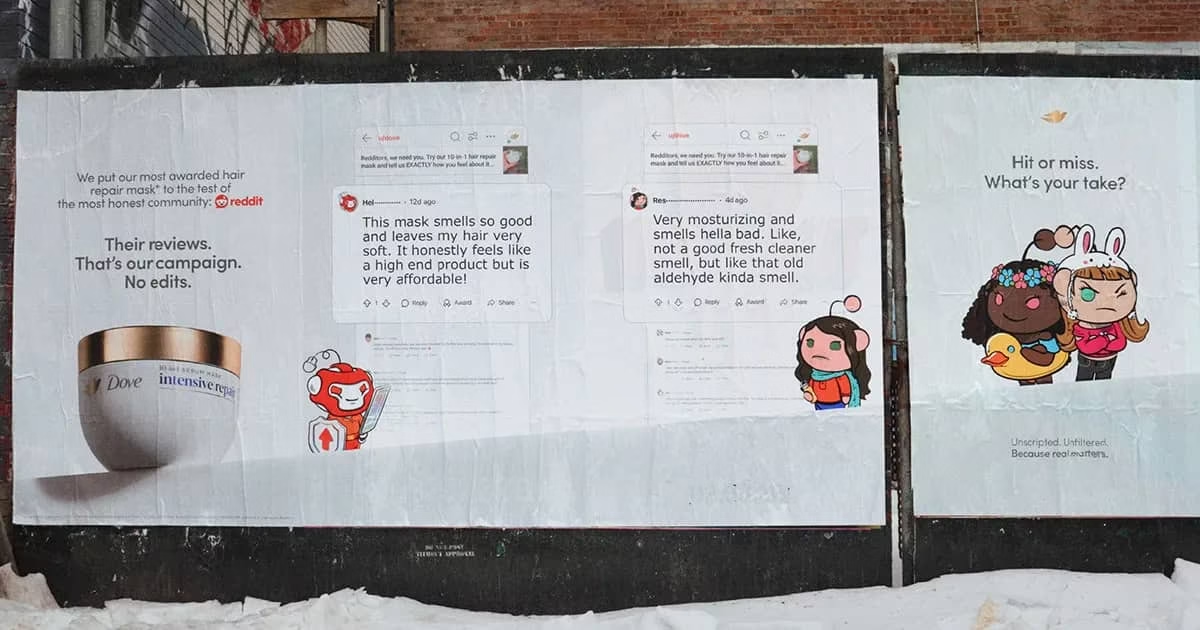
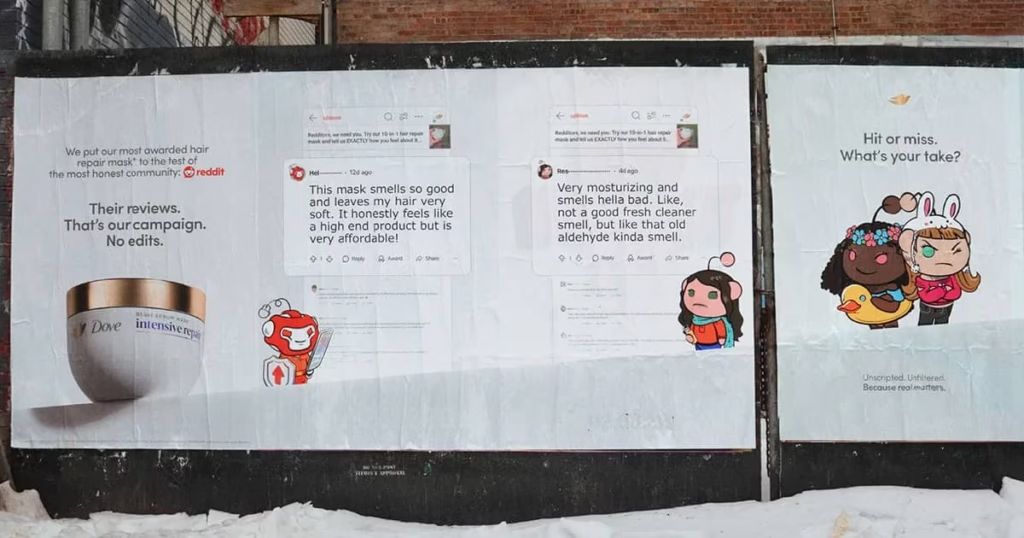
#1: This absolute banger of an ad campaign by Dove
We know there’s a huge amount of irony that our favourite bit of copywriting this month contains almost zero copywriting whatsoever.
But, as per usual, Dove have killed it with this OOH ad campaign based around real, unfiltered feedback from reddit users about their products.
And of course, there’s loads of really clever consumer psychology going on under the hood.
👉 In July of last year, Duke University, Wisconsin and HKU published a study that specifically looked into the impact of brands sharing insults and bad reviews. And across multiple lab studies and a field experiment on Meta ads, they found that — without fail — brands that reappropriated mild, unfair insults were seen as more humorous, more confident & mentally tough and generated higher click-through rates.
👉 Research shows that brands with a mix of good and bad reviews are seen as more trustworthy than brands with only glowing feedback, because the imperfections signal “real people with real opinions” rather than a PR machine.
👉 Brands owning their flaws makes us think “this brand is probably a safe bet.” Taking a reputational risk (like repeating a bad review in your own ad) is a classic trust signal, because brands only do it if they’re confident in the quality of their product. And time after time, bold ads like these outperform safe, trust-building ads.
And that’s before we even mention the free visibility of it all. (This ad campaign generated a tonne of press and publicity.)
But our favourite thing about this campaign is how this is incredibly on-brand for Dove.
It’s that big thing we come back to again and again about how the best brands have a worldview that they don’t budge from.
For Dove, that worldview is all about keeping it real.
And in an age of positivity-for-pay UGC and cherry-picked user reviews, Dove continuing that manifesto of “we’re going to show and tell things how they really are” is huge not just for standing out, but for customer trust.
On top of that, it cuts through the noise in a sea of overly polished beauty ads and we-didn’t-ask-them-to-say-this-we-swear UGC videos. (Von Restorff, baby!)
It’s sticky. It’s rooted in consumer psychology. It’s clever as hell. And it’s 100% on-brand.
So we obviously absolutely love it. No notes.
🧠 Steal this for your brand: while this big, in-your-face approach to sharing the good and the bad might be too risky for you, you can still do the smaller version of it and share some bad reviews as ad creative (which can boost CTR by 27%).
Here’s a guide to creating your own bad review ads (and dodging the pitfalls) we wrote last year.
#2: This really clever, zeitgeist-y recruitment ad
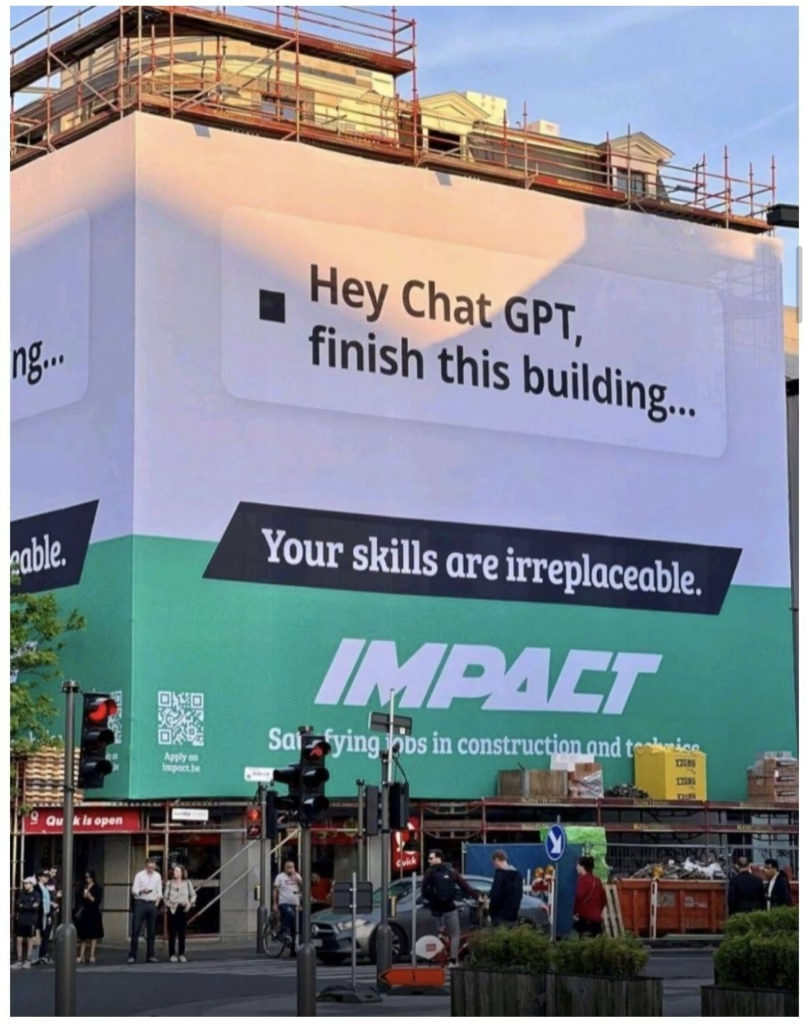
Jack cut his copywriting teeth writing recruitment ads for billboards and newspapers in London, so this billboard went straight into our swipe file.
(Note from Jack: that makes it sound far more cool and metropolitan than it was. However, I did get to write an ad to recruit developers for the Bank of England, so I wrote the billboard entirely in code with a bunch of errors in it and then added the tagline “If that code is making your eyes twitch, we should talk.” I liked that one.)
Now, back to this Impact billboard.
Is this copy a bit on the nose? Sure.
Is this a bit of a tired joke if you spend all day online? Sure.
But that’s kind of the point.
The really clever thing is that it manages to tick all of the cultural hijacking boxes that make ads like this so successful (and help them go from offline-only to getting shared across the internet organically) without talking down at their audience or joking at their expense.
(Remember when we looked at those attempts that fell short by Brewdog and Revolut? That’s what happens when you get focused on going viral, not speaking to your audience.)
On top of that, absolute kudos to the agency for running this ad. We’d bet a load of money that the first concept of this ad was some variation of “Build a career that lasts”. (Ask Jack how he knows…)
But by playing off of all the “AI will take your job” chatter, this ad turns construction — an industry often reduced to stereotypes or somewhat looked down on — into a badge of pride. It’s an ad that lifts them up and makes them feel good not just about their next role, but about their career in general.
(Which means that even if they don’t apply for this role, they’ll feel good about the recruitment agency in general.)
☝️ It’s just so good. You can’t write an ad like that without really understanding your target audience. Which is why we love it so much.
And, unsurprisingly, it led to real results too.
After this billboard was up for just 9 days, it brought in 6 times the number of applications construction jobs usually get.
It was featured in the New York Times.
And on social media, it generated 150 million views, 800,000 shares (800,001 now, we guess) and the recruiter saw a 10-fold increase in the number of visits to its website.
🧠 Steal this for your brand
If there’s one thing that you can steal from this, it’s that really, really knowing how your audience think and feel and see the world is the biggest game-changer for your copy.
And it’s why the first part of any project we work on is always about spending as much time as we can drowning ourselves in VOC data, hanging out with your audience online, following the same influencers… because it’s the brands that obsess over their customers and make a habit of feeding that insight back into what they do that win time and time again.
#3: This little bit of throwaway honesty from Spudos
Full disclosure: we’ve talked about this particular bit of copy before, but we thought it was worth revisiting as we head into B-Corp Month.
(And, even more transparently, we’ll be dropping a full deep-dive into the Spudos brand voice and website copy in the next few weeks because their website is absolutely chock-a-block with little things you can pinch and put to work for your own brand. And we’re saving the good stuff for that.)
But as you head into a month where you might have to write about your eco creds, etc… it’s a good idea to remember this little bit of copy 👇
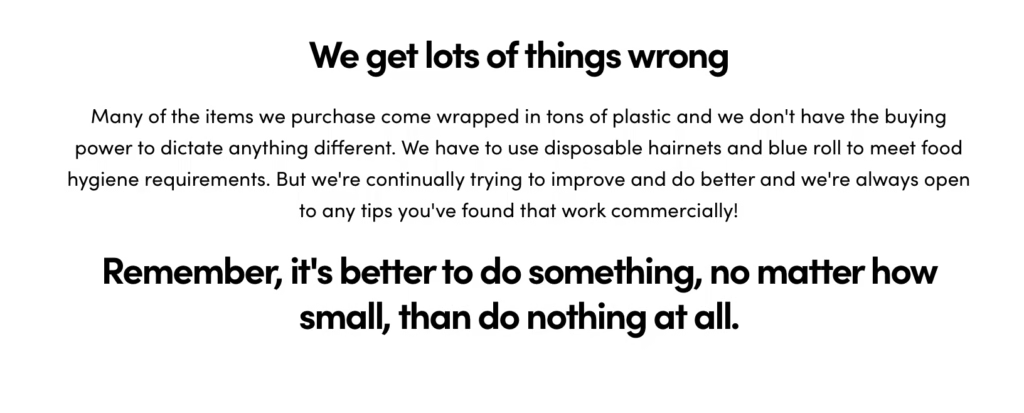
And while this bit of copy might not seem like much at first glance, it’s doing an awful lot of really clever stuff.
Because while there are exceptions (shoutout to the legends at Toast Brewing who also nail that line between being transparent and optimistic), most “green” copy tries to do the same two things:
- reassure you the brand is doing the right thing
- get you to feel good about buying from them
And that’s all well and good.
But a) pretty much every brand is doing that.
And b) when eco claims are used to try and sell a product, the language can easily become too perfect, too sweeping, too broad… which doesn’t just undermine trust in your brand, it puts you at risk of a slap on the wrist from the ASA.
(Which has happened to a few brands lately when the copy on websites wasn’t incorrect or untrue, but was making eco claims that were too broad and not accurate enough.)
Spudos cleverly mitigate that issue by explicitly saying that they’re not perfect.
And on a page where they’re talking about all the good that they do, this little paragraph sets expectations and steers them away that too-perfect trap.
TLDR: the more absolute your claim (“sustainable”, “zero impact”), the easier it is to fall into that trap of accidentally misleading your customers.
(We’re not lawyers, so get your copy checked by experts before it goes live. But this rule of thumb has served us well whenever we’ve worked with brands that do good.)
But (in case you missed it when we looked at this last year) there’s another big benefit to this copy, too.
Admitting your flaws alongside your strengths is called two-sided messaging and studies show that it also increases your brand’s credibility and makes your message more believable.
And then, to wrap it all up in a bow, they add that last line.
“Remember, it’s better to do something, no matter how small, than do nothing at all.”
If you’re a brand that wants to encourage your customers to adopt better behaviours, then positioning your brand as perfect and doing everything right can actually backfire on you a bit.
Why? Because it creates this idea that doing everything right is the only way to make a difference.
And on a psychological level, that’s discouraging for customers.
Studies show that perfectionist language often makes people give up habits faster. It triggers that all-or-nothing response in our brains where we think: well, if I can’t do it perfectly then I won’t do it at all.
And then, to top it all off, Spudos have sprinkled in this “we can do this together” attitude that creates this sense of community and togetherness between their brand and their customer that is really clever.
Love it.
(We mean, who doesn’t love a brand that is this passionate about crisps and the planet?)